The Future of Primary Care Is Changing — And It's Happening Beyond the GP Practice
From the Pharmacy Show to the future of neighbourhood healthcare: why every clinician should be paying attention to community pharmacy.
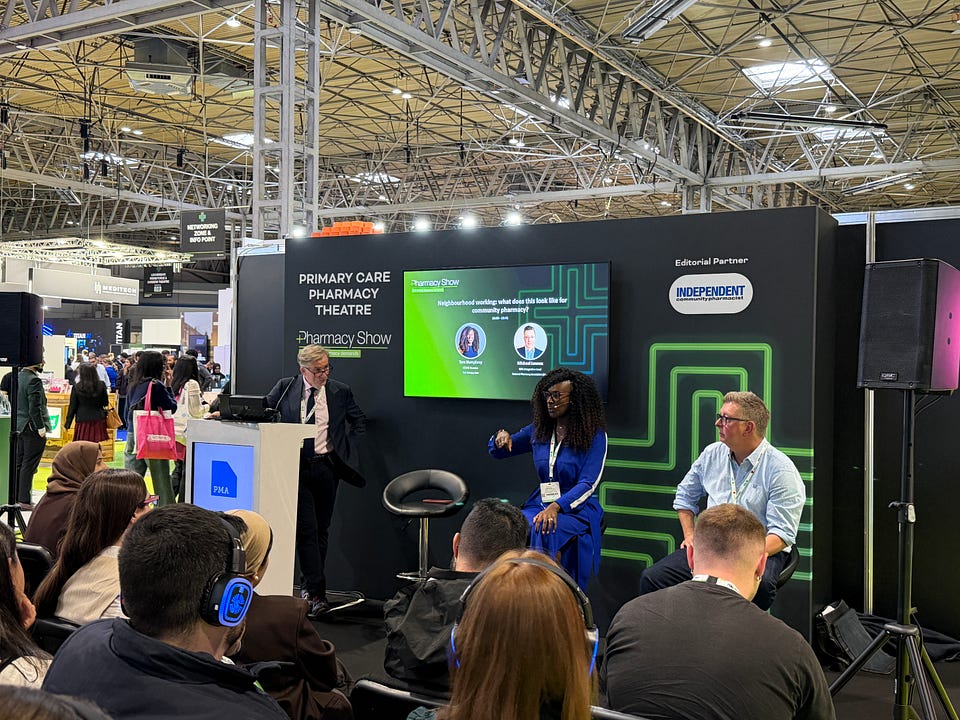
Over the past few weeks, something interesting has been happening at Pareto Education. We’ve launched our new CPD @ 7pm for Pharmacists series, a programme of free weekly educational webinars aimed at supporting community pharmacists as they prepare for the anticipated expansion of Pharmacy First and the growing role of independent prescribing.
What started as an educational initiative has quickly become something much bigger.
Through our webinars, pharmacist focus groups and conversations with clinicians across the country, we’ve been gathering valuable insights into the challenges facing community pharmacy. From confidence in clinical assessment and prescribing to recognising red flags, navigating referral pathways and understanding the limits of professional competence, a consistent picture has started to emerge. We’ve been sponges over the past few weeks - sitting into conversations and chipping in wherever we can..!
Ultimately, community pharmacy is preparing for a significant transformation. But how ready is the wider healthcare system to support it?
A Trip to the Pharmacy Show… And Some Important Conversations
With so many questions emerging from our educational work, we decided to head to the Pharmacy Show at the NEC Birmingham to hear directly from the people involved in shaping the future of pharmacy services.
The weather held up, the freebies were off a high quality and I had plenty of (free) coffee throughout the day. But that’s not the point….
We spent time speaking with community pharmacists, pharmacy owners, professional organisations, NHS and ICB leaders, and those involved in developing and commissioning new services. Our conversations explored everything from clinical training and prescribing competence to supervision, governance, patient safety and the practicalities of rolling out expanded services.
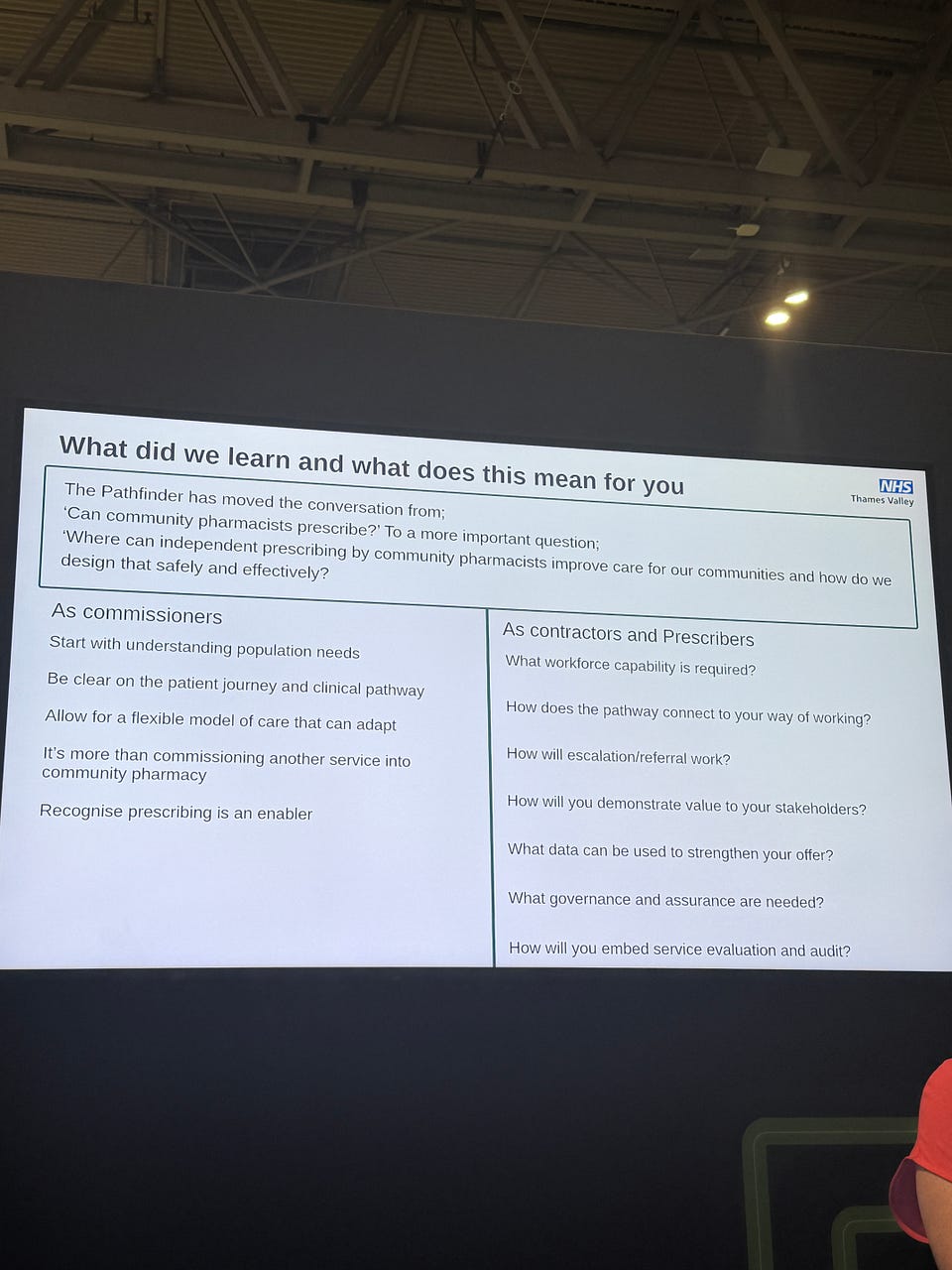
One message stood out: Prescribing is an enabler. In other words, qualifying as an independent prescriber is only one part of being ready to prescribe independently.
There is a much wider conversation to be had about ensuring pharmacists feel confident, competent and supported in their clinical decision-making. Equally, pharmacy owners and commissioners need assurance that the right clinical governance structures are in place.
It’s not simply about whether pharmacists can prescribe. It’s about creating an environment in which they can prescribe safely, effectively and sustainably.
Why Should GPs, Nurses and Other Clinicians Care?
Because the future of primary care is increasingly going to be shared. Pharmacies experience the largest footfall of any healthcare setting so it’s only natural that they were going to be roped into the neighbourhood set up.
As community pharmacists take on greater responsibility for assessment, diagnosis and treatment, their relationship with general practice and other community services will inevitably become closer.
We can expect to see greater digital connectivity between GP practices, ICB systems and community pharmacies, improved access to shared clinical information, and more clearly defined referral and escalation pathways. There will also be an increasing need for joint clinical discussions, multidisciplinary meetings and collaborative working between pharmacy teams and wider primary care professionals.
Consider a patient who presents to their local pharmacy with a respiratory complaint, receives an assessment and is subsequently referred to their GP because of concerning clinical findings. How is that information communicated? Who takes responsibility for follow-up? What happens when the clinical picture is uncertain, or when prescribing decisions are complicated by multimorbidity? How does a pharmacist access blood results before making a prescribing decision?
These are not exclusively pharmacy questions. They are questions for the entire primary care workforce. In summary, there is a long way to go.
Training, Governance and the Missing Pieces
Perhaps the most valuable learning from our conversations has been the recognition that training alone isn’t enough. Pharmacists enter independent prescribing with different educational backgrounds, levels of clinical exposure and little to no experience of managing undifferentiated presentations. Very few will have extensive consultation experience, while most may be expected to begin prescribing in relatively unfamiliar clinical settings. This variation isn’t necessarily a problem, provided the right systems exist to identify learning needs, assess competence and offer ongoing support.
At Pareto Education, we’ve been exploring how a more comprehensive support programme could help bridge this gap. This is where we intend to step in.
This begins with practical, case-based clinical training, supported by structured assessments such as OSCEs to demonstrate competence in consultation, clinical reasoning and prescribing decisions. But it shouldn’t end when the initial training finishes.
Ongoing clinical supervision, communities of practice, accessible discussion forums and clear escalation routes are equally important. So too are clinical portfolios, prescribing audits, incident reporting, documentation standards and meaningful feedback to pharmacy owners and commissioners.
Importantly, any programme needs to be developed alongside ICBs, commissioners, Local Pharmaceutical Committees and the pharmacists delivering these services. Local pathways, governance expectations and population needs will all influence how services are implemented. Our conversations reinforced that successful service expansion requires both clinical capability and organisational assurance as one cannot replace the other.
This is where our thinking lies… and this is ultimately where we currently see our next step.
We’d love to hear your thoughts on the issue.
Coming Up This Week: Heart Failure Beyond the Ejection Fraction
Free CPD Webinar | Wednesday 21 October 2026
Speaker: Dr Aamer Mushtaq (Consultant Cardiologist)
Time: 7:00pm | Online via Microsoft Teams
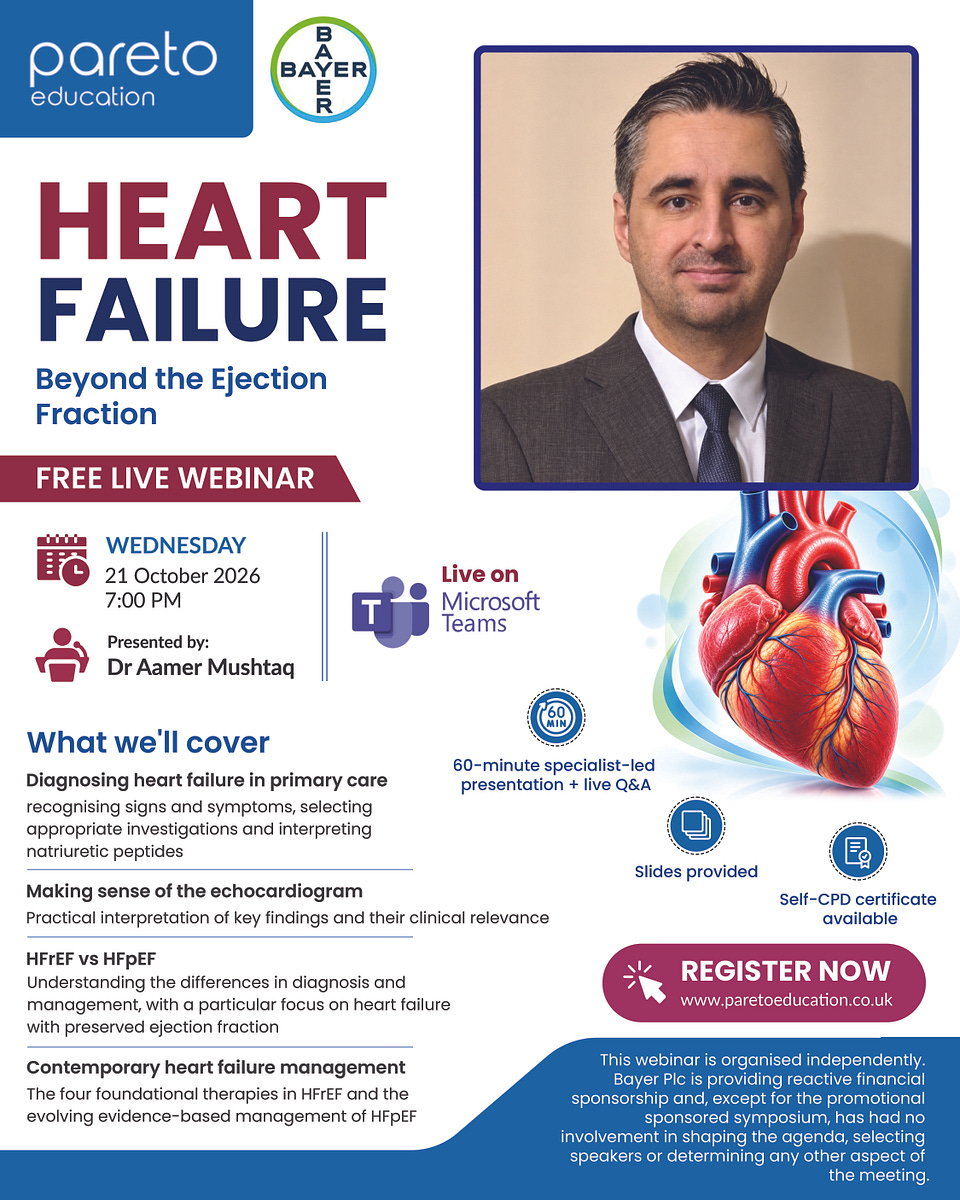
Heart failure remains one of the most important conditions encountered across primary and community care. Yet recognising it early, interpreting investigations and optimising treatment can still present challenges, particularly in patients with multiple long-term conditions.
This Wednesday, we’re bringing you a practical, clinically focused webinar exploring heart failure beyond the traditional emphasis on ejection fraction.
We’ll look at the recognition and investigation of heart failure, the significance of different heart failure phenotypes, contemporary management principles and the role of clinicians in monitoring treatment, recognising deterioration and coordinating ongoing care.
Whether you’re a GP, ACP, pharmacist, nurse or another prescribing clinician, this session promises to offer useful insights that can be applied directly to everyday practice.
The webinar is free to attend, CPD accredited and supported by Bayer.
Visit: www.paretoeducation.co.uk
Originally published on Substack.