
A Devastating Case: Language, Communication and Immense Service Pressures
Reflecting On a Tragic Paediatric Death

Christmas is certainly a time of happiness for parents, children, and grandparents. It also marks the depths of the winter season and, with that, a surge in infections. I actually worked in A&E the other day. It was a department ridden with flu and as I write this newsletter, I feel that an infection is brewing in me!
This year, the rise in flu cases is unprecedented. Some call it “super flu.” With the system under so much stress, there are inevitably cases that occur as a result of failures within the system as a whole. This is one of them.
A recent inquest into the tragic death of a nine-month-old infant at the Royal Cornwall Hospital has uncovered some deeply troubling findings. Izzah, who was only nine months old, had become increasingly unwell over a number of weeks after being fed cow’s milk by her parents.
The inquest found that her parents were unaware of the risks of doing so. Izzah’s mother was from abroad, and while her father spoke English, his proficiency was very limited. Despite seeking help on a number of occasions, the father repeatedly told professionals that Izzah was “bottle-fed,” but this was never clarified further. Professionals assumed this meant she was formula-fed; however, this was later found to be an assumption arising from a lack of professional curiosity.
Despite being given a leaflet about infant feeding, it was found that the leaflet was in English only, with no foreign-language equivalent, and it did not mention cow’s milk. The exact cause of death was anaemia, as cow’s milk contains very little iron.
This is harrowing. Is it the parents’ fault? Should they have instinctively known that feeding their baby cow’s milk was unsafe? Should staff have made greater efforts to clarify the exact type of milk Izzah was being fed? Is it the parents’ responsibility to find a foreign-language equivalent of the written information provided? Ultimately, all of this brings me back to a common phrase used in medical school:
“When disasters happen, it is never down to an individual. Rather, it is due to a system.”
While this can be difficult to see at the time, the above holds true across medicine. Most of us are not involved in higher managerial roles and therefore have little insight into how such incidents are dissected and investigated. However, having read parts of the inquest and the subsequent judgment, there are several vital lessons I have taken into my own practice. I hope these are useful to you too.
1. Clarifying Patient Communication — No Assumptions
One of the key themes arising from this case is the danger of assuming understanding when a patient or family member speaks some English. Apparent language competence can mask gaps in comprehension of clinical terminology, treatment risks, or care instructions. Avoid using family members or Google Translate as a substitute for professional interpretation services. A language barrier is a patient safety issue, not merely an administrative inconvenience.
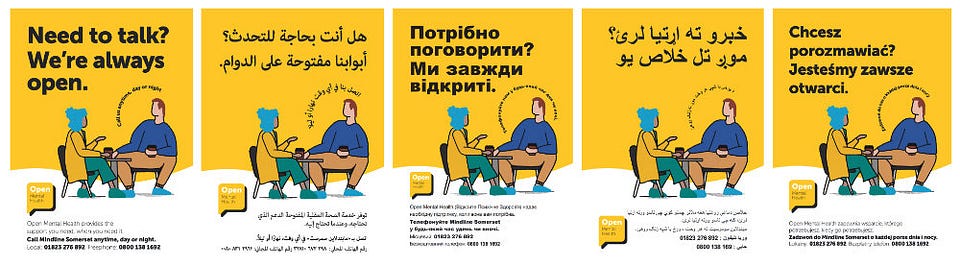
2. Use Translated Materials
There is a wide variety of patient information available online for many clinical conditions. While it may be tempting to leave patients to find their own resources, good practice involves sourcing and sharing evidence-based leaflets. If a patient does not speak or read English, it is prudent to check whether an equivalent translated leaflet is available. This is often straightforward, as most staff intranets provide access to such materials.
3. Safeguarding — Reinforcing Routine Checks
While communication challenges were central to this case, the inquest also highlighted a lack of professional curiosity—serving as a reminder that safeguarding checks and basic health assessments must remain robust:
- At every contact with children and vulnerable adults, ensure safeguarding screening questions are consistently asked and documented.
- Be alert to inconsistencies or gaps in parent or caregiver accounts, which may be amplified by language barriers or misunderstandings.
- Ensure all clinicians feel confident in escalating concerns appropriately and that safeguarding pathways are clear and embedded in everyday practice.
I followed this case closely and reflected deeply on my own practice as a result. I hope the findings from the inquest prompt similar reflection for you.
Happy holidays!
Website: www.paretoeducation.co.uk
Instagram: www.instagram.com/pareto_ed
Twitter: www.twitter.com/pareto_ed
Youtube: https://bit.ly/3DPm23c
Email: info@paretoeducation.co.uk
Originally published on Substack.


