
A Review of AI in Healthcare - What About Our Jobs?
Have you subscribed to our Youtube page?
Some announcements are legendary and the Labour governments promise to “tech-enable” the NHS was once of those.
It’s well known that the NHS has been behind on technology. Think about your own hospitals/surgeries. I mean, I remember working as an FY1 doctor in 2017 and we were still sending referrals via fax machines - in an age when we had email software on our smart phones.
The idea behind the announcement was to utilise the rapid development of AI. Every industry is doing it - universities, security services, transport and the question that has been asked - why not the NHS?
Anyway, since the announcement there have been lots of “med tech” firms popping up which are utilising AI technology. From radiological diagnosis to clinical education, many of these organisations are making huge strides so we thought we’d review some of the key areas some of these AI companies are really making a difference.
Cancer diagnosis — AI helping clinicians find more disease, faster
Are humans going to be replaced? Probably not. Think about this particular set of software as a toolkit. Infact, if you work in secondary care you will notice that some of the chest x-rays are already being screened by AI software.
Software like KHEIRON uses AI to help detect cancers in mammography, an imaging modality which is traditionally quite difficult to interpret. One study reported one study reported ~12% more cancers detected versus routine practice when Mia was deployed alongside radiologists. Trusts running these pilots also reported earlier detection for some patients. This is one of the clearest, peer-reviewed clinical uplifts for an AI tool in UK breast services.
It’s not just radiology that is benefitting. PathAI is a tool utilised by hospital trusts to assist pathologists with tumour detection and biomarker workflows. These tools aim to reduce time to diagnosis and standardise reporting which is particularly useful when orchestrating care over large areas
Decision making tools
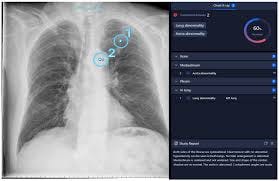
One of the biggest fears in the UK is winter pressures. We all know how badly the health service suffers in the winter months. As well as expanding key services such as urgent care, virtual wards and diagnostic hubs during this period, the NHS has committed approximately £21 million for AI tools designed to analyse X rays and CT scans to speed up lung-cancer diagnosis across trusts. This includes reporting of chest x-rays and CT head scans. Such software will mark obvious abnormalities to help guide clinician review, subsequently enhancing the efficiency of their time. Clever stuff
Documentation
This is the remit of AI software everybody’s talking about. Let’s face it, documenting is a pain but is an important facet of safe, clinical practice. Documentation burden is a leading reason for clinician burnout so such innovation is very welcome. Aside from Heidi, other software such as Dragon Medical One have been adopted by NHS sites to help capture clinical notes by voice. Such software is already used by radiologists but has now been enhanced to accompany different settings (loud settings) and accents. NHS case studies show big improvements in letter turnaround and time saved on routine documentation when speech recognition is embedded in EPR workflows.
System Integration
This is a big one. To simplify things - integrating systems is one of the hardest thing in modern day data management. Think about how long it took for clinicians in primary care to access secondary care data or vice-versa. It requires “bridging” software if access is required on a single interface. AI makes things more practical. It helps software to “talk” to eachother.
As part of this approach is removing the practical barriers to AI. The entire AI database has to be “AI-enabled” allowing developers to develop software specifically designed to run on NHS software. The NHS England’s AI deployment platform (AIDP) provides this in the form of imaging which we touched on above. The idea is to expand this to other types of software solutions.
Patient Access
Oh.. the bane of every health service. How can we improve access and thus improve health equity? We’re quite big on health equity at Pareto and I’d urge you to read some of our previous newsletter issues on the topic.
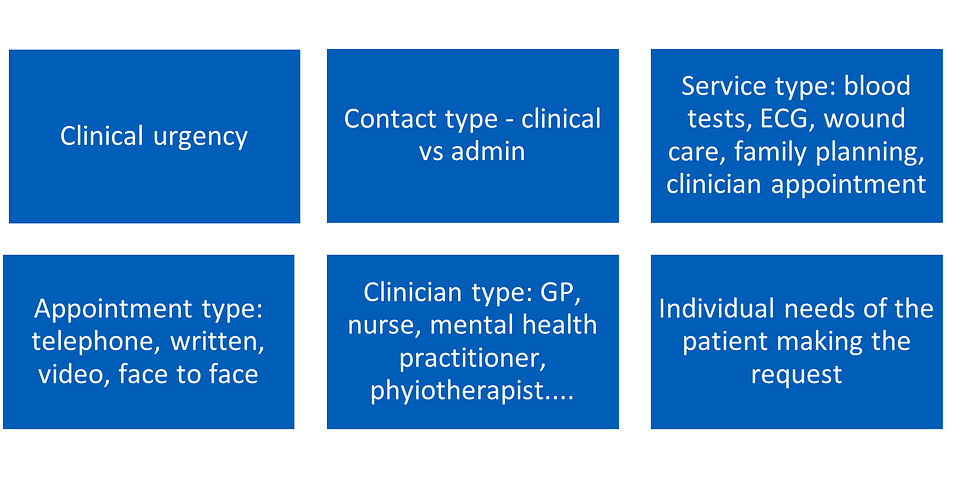
If you’re in primary care you’ll know about Accuryx, eConsult and PATCHS. AI will unleash these software in many respects. Think about other software you use which has the option “generate AI”. Imagine auto-generating responses for blood results, prescriptions and appointment bookings or follow ups. As for triage, AI will guide receptionists to make more efficient decisions concerning sign-posting and booking appointments.
So what are the key takeaways?
- The government has moved from talk to action: new commissions and central deployment pilots are lowering practical barriers for AI vendors and NHS trusts.
- Clinical wins are concrete: breast AI (Kheiron/Lunit) and radiology pilots show higher detection rates and faster triage; pathology AI promises similar workflow gains.
- Non-clinical wins matter: speech-to-text (Dragon) and triage/messaging platforms (Accurx, eConsult) reduce admin, free clinician time and cut missed appointments — simple ROI for trusts.
- Governance & evaluation are still essential: success stories come with strong clinician oversight, transparent validation and data-protection safeguards. The government’s regulatory work aims to standardise those safeguards.
Are our jobs safe?
The reality is that human clinicians will always be required to make the “final decision.” Diagnosis requires humans to not only take a history but also read a patients emotions, understand their body language and negotiate a management plan. Think about safeguarding concerns, only a human being can effectively ascertain this.
However, we will likely see a drastic change in the wider workforce. Ward clerks, triage receptionists and clinical scribes may become a “thing of the past.” Such tasks can be completed by AI and the NHS is moving towards utilising such tools. Ultimately, the drive to cut costs whilst improving the efficiency is the aim of every advanced healthcare system.
Let us know what you think about the above!
Until next time….
How’s your haematology?
When you think haematology - what do you think? Blood tests, blood films, thalassaemia, iron deficiency and leukaemia. All of these are tricky diagnoses and require an understanding of blood cells, genetic conditions, blood interpretation and subtle clinical signs that point to potentially catastrophic diagnoses.
For this reason we have invited Dr Mehvish Ul-Haq, a registrar in haematology who will deliver our CPD Haematology Masterclass. This CPD accredited course will be held on Sunday 16th November from 10am - 1pm and will elucidate simple and challenging presentations in haematology.
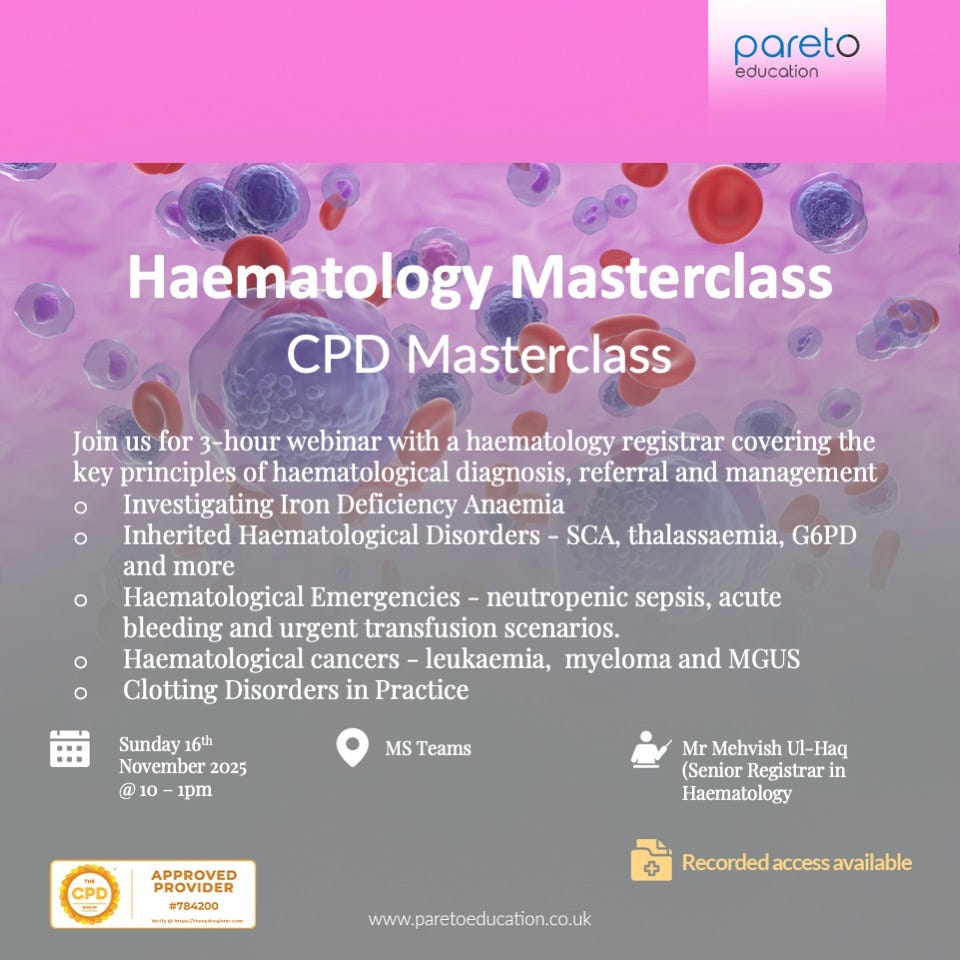
It promises to be a fantastic event. Don’t miss out and book here!
Support Us by Subscribing to our Youtube Page
At Pareto, we’ve made it our mission to try and keep clinical education as accessible as possible. We understand that the healthcare climate is difficult - busy days, long clinical hours and a severe lack of jobs across the board.
It is for this reason that we’ve invested a lot of time on Youtube to provide tutorials on crucial topics including blood interpretation, ECG tutorials, X-ray interpretation and managing chronic pain. We’ve also provided guidance on practical matters such as CPD, quality improvement and effective documentation. Our YouTube Page has also catered to students by providing OSCE training videos.
You’ve showed us amazing support throughout our journey and we would like to request that you kindly subscribe to our YouTube page. Subscriptions help us grow and become visible on platforms which are flooded by creators. You can simply do this by clicking on the video below and click subscribe. We will be eternally grateful!
Website: www.paretoeducation.co.uk
Instagram: www.instagram.com/pareto_ed
Twitter: www.twitter.com/pareto_ed
Youtube: https://bit.ly/3DPm23c
Email: info@paretoeducation.co.uk
Originally published on Substack.


