
Can We Talk About Polypharmacy?!
An intriguing case of "overprescribing"
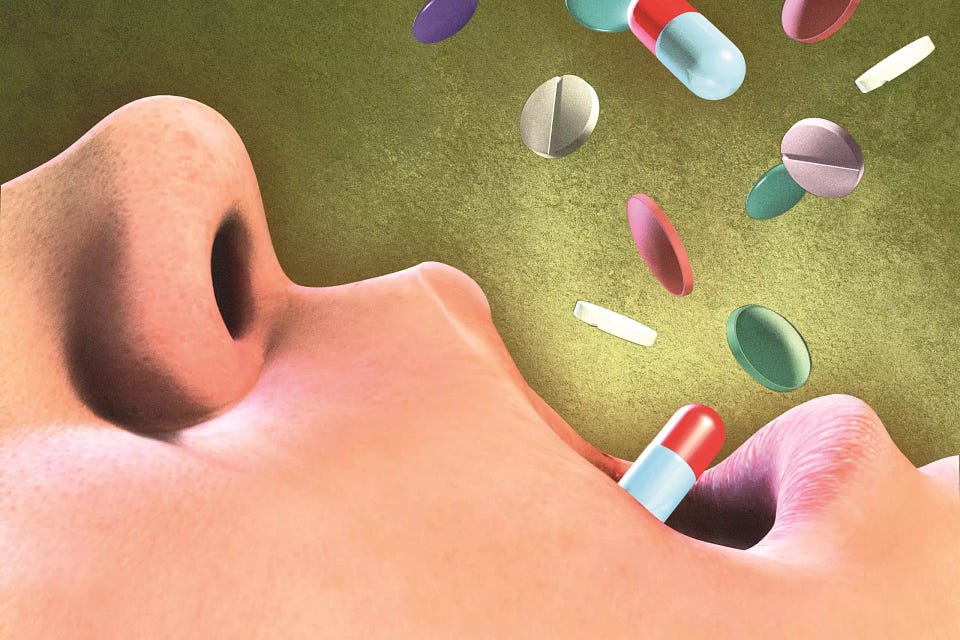
How was your weekend? Mine was great. I went to see my parents before they fly off on holiday which was a pleasant surprise for them. The weather was good, the food was good (mum’s cooking is THE best — don’t tell my wife) and I also had the chance to deliver part of the chronic illness’ masterclass.
We had an awesome crowd and we had some fascinating discussions. During the presentation on the latest prescribing guidance, stepwise treatment and drug interactions a thought crossed my mind…
“Prescribing is “easy” but DE-PRESCRIBING is a different ball game…”
In typical style, I started to think about de-prescribing and poly pharmacy and found some interesting facts.
Around the UK, 8.4 million people are prescribed five or more medications. And the risks go up with every extra tablet. Frail patients taking 10 or more medications are at much greater risk of falls, confusion, low blood pressure, and even death. These are concerning statistics and also put a huge burden on clinical staff including doctors, nurses, district nurses, neighbourhood teams and others.
Let me share a case I assessed a few weeks back. I’ve called her Mrs Green. She’s 83 years old, and recently had a couple of near-falls in the hallway at night. This was a chronic disease review so there wasn’t a reason for her presentation per se. She did tell me that she’s been “feeling fuzzy” and her “legs go wobbly.” Her repeat medications include amitriptyline for neuropathic pain, solifenacin for bladder urgency, nefopam for occasional back pain, plus a beta-blocker, a statin, and some laxatives.
What’s the issue here? A high anticholinergic burden. Drugs like amitriptyline and solifenacin are particularly sedating and increase the risk of falls, especially when used together. I spoke to the PCN pharmacist as I didn’t want to mess around too much with her medications without having the capacity to regularly follow her up. The point here isn’t about de prescribing. It’s about recognising the risk of polypharmacy and starting the patient on a journey of de prescribing.
In the end we tapered her off Amitriptyline and she felt much steadier on her feet. My main reflection from this case was not how we helped the patient but how easy it can be to over-prescribe medication. Think about it… Some of the worst offenders in terms of avoidable harm include medications we prescribe every day: tricyclic antidepressants like amitriptyline, bladder relaxants like solifenacin, strong painkillers like opioids and nefopam, and sedatives or sleeping tablets. Add in antihypertensives, diuretics, or anticoagulants, and the chances of drug–drug interactions, dizziness, confusion, or bleeding rise significantly. Often, one medicine leads to a side effect, which gets treated with another medicine—a prescribing cascade that can spiral out of control.
Our PCN pharmacist is excellent and has even run a few teaching sessions for us. There are some useful tools to help you with medication reviews. For example, the STOPP/START criteria are a practical set of guidelines that help flag which drugs might be inappropriate in older people and what might be missing. There are also useful calculators such as the anticholinergic burden calculator which tallies up how sedating and cognitively impairing a patient’s meds might be. These are great tools to help you build confidence in what to stop, and why. Fundamentally when we are prescribing a medication or reviewing it we should be asking..
What does the patient actually need?
What is helping?
What might be harming?

By the way.. it’s not easy to stop medication. I find it very difficult to do so. What if things get worse? What if the original problem returns? But often, the braver choice is to take a step back and ask: do all of these medications still make sense for this person, now? It’s not about stripping meds just for the sake of it. It’s about being thoughtful, cautious, and always keeping the patient’s quality of life at the centre.
Polypharmacy is one of the quieter threats in modern medicine, but also one of the most treatable. Recognising it, being brave enough to question it, and working alongside our patients to reduce harm. This is an extension of good medicine and what primary care is all about.
Until next time
Whilst We’re On The Subject…
If you’re in the business of home visits - I would certainly recommend watching this video on the subject. We’ve taken the latest guidance in practice as well as anecdotal examples from clinicians to bring you a unique perspective on how to prepare for a patient home visit. Watch this video for FREE on YT and don’t forget to like, subscribe and share!
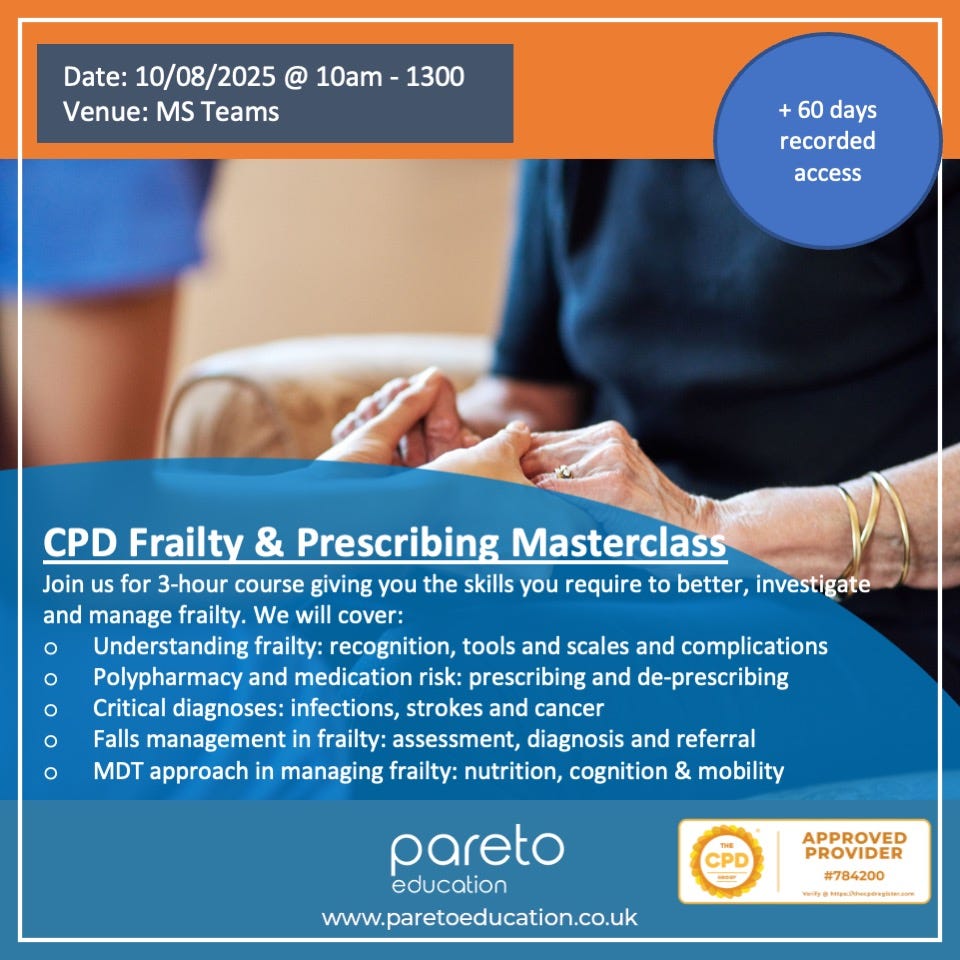
CPD Frailty & Prescribing Masterclass
As this weeks newsletter is about prescribing practice, it’s only natural that we plug in our upcoming masterclass! We take the topic of frailty and prescribing and put it under the microscope to provide some detailed teaching on up to date practice. Delivered by a doctor (ME) & a pharmacist, this brings together the spirit of MDT cooperation in the form of a CPD masterclass. You can read more about it here.
Website: www.paretoeducation.co.uk
Instagram: www.instagram.com/pareto_ed
Twitter: www.twitter.com/pareto_ed
Youtube: https://bit.ly/3DPm23c
Email: info@paretoeducation.co.uk
Originally published on Substack.


