
Endometriosis & Infertility: New, Bespoke Guidance
A welcome change in guidance for a condition that affects thousands.

Infertility and endometriosis.
Emma, a 32-year-old woman, presents after 2 years of trying to conceive. She has a known history of endometriosis which was diagnosed laparoscopically 5 years ago. Her cycles are normally regular, and she reports manageable pelvic pain… After a long journey with gynae. Her partner has not yet undergone semen analysis but has a child with his ex-partner.
2 years is a long time and Emma is naturally quite frustrated. Under traditional fertility pathways, someone like Emma might be managed similarly to someone with “unexplained infertility,” potentially waiting up to 2 years before referral for assisted conception. This was the case until only recent where there has been a significant update in the latest NICE guidance. This week’s newsletter is designed to elucidate the latest guidance which will help you make more efficient referral decisions in patients with endometriosis that are suffering from infertility.
The updated NICE guidance suggests otherwise.
Endometriosis and Infertility: Why The “Be-spoke” Approach?
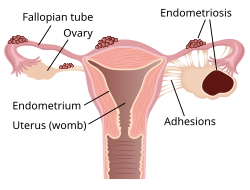
Endometriosis-associated infertility is not simply a variation of unexplained infertility. Traditionally consultations explored lifestyle factors such as smoking, alcohol and frequency of sexual intercourse. Whilst these things are important in patients with endometriosis there is a pathological process that makes conceiving so much more difficult. In summary, they comprise of:
- Inflammatory peritoneal environment affecting gamete function
- Distorted pelvic anatomy impairing oocyte pickup
- Altered endometrial receptivity reducing implantation potential
- Ovarian reserve impact, particularly following surgery
Unlike unexplained infertility, where no clear cause is identified, endometriosis involves multiple interacting biological disruptions, often affecting more than one stage of reproduction. This complexity underpins the rationale for separating these patients into a dedicated fertility pathway where referrals can be made in a more timely manner, and decisions can be made in light of these unique pathological processes.
Therefore, NICE recommend an early referral for patients with confirmed endometriosis. The need to wait for 18 months before referral no longer applies.
Although - referral is not immediate so patients should be given a realistic timeline of when they might be reviewed.
So… What’s Changed? What Happens When the Patient Reaches Gynae?
The updated NICE guidance introduces a structured, stepwise approach for patients with endometriosis. We’ll contrast this to the last guidance shortly but in summary, the options are as follows.
- Expectant ManagementAppropriate in selected patients (younger age, shorter duration of infertility, minimal additional risk factors).
- Surgical ManagementConsideration of laparoscopic treatment where indicated
- Particularly relevant if symptomatic or if anatomical distortion is suspected
- Assisted Reproductive Technologies (ART)IUI or IVF depending on individual circumstances
- Typically considered after ~2 years of unsuccessful attempts, or earlier if indicated
How Does This Differ from Traditional NICE Fertility Pathways?
Historically, fertility management followed a more generalised model in which most couples were offered expectant management for up to two years before referral for assisted reproductive technologies if conception had not occurred. Patients with endometriosis were often managed within this broader framework unless their disease was considered severe.
What has changed is that endometriosis is now explicitly recognised as a cause of infertility that requires tailored management. Clinicians are encouraged to individualise decision-making earlier, and the pathway allows progression to intervention sooner when this is clinically justified.
This does not mean that every patient with endometriosis will automatically be referred earlier. However, the two-year timeframe is no longer rigid, and referral may occur sooner depending on clinical factors such as age, ovarian reserve, symptom burden, prior surgery, and any coexisting fertility issues. In practice, this means clinicians should have a lower threshold for referral rather than waiting passively.
The Growing Importance of Male Factor Fertility
An important emphasis in the updated guidance is the early and equal consideration of male factor infertility. This is particularly relevant in endometriosis because fertility problems are often multifactorial, and delaying semen analysis risks missing dual pathology. In some cases, identifying a male factor issue may also shift management directly toward IVF, bypassing intermediate steps that would otherwise delay treatment.
In Emma’s case, failing to assess her partner early could lead to delayed diagnosis and inefficient use of time in a condition where fertility may already be compromised. The message is clear: both partners should be evaluated early, regardless of a known female diagnosis.
Key point: When testing a male for fertility, be sure that they do not ejaculate between 2-7 before they produce their sample ejaculate. This is a common reason why samples are rejected and subsequent delays occur.
Moving Away from “Mild” vs “Severe”
Previous classifications often used terms such as “mild” and “severe,” usually based on surgical staging systems. These labels were intended to describe the extent of visible disease and the degree of anatomical distortion but they were problematic because they correlated poorly with fertility outcomes. They also oversimplified a complex condition and risked underestimating the impact of so-called mild disease.

The updated guidance shifts toward individualised assessment, taking into account symptoms, ovarian reserve, duration of infertility, surgical history, and partner factors. This reflects a move away from static labels and toward dynamic clinical evaluation.
A Practical Approach for Clinicians
So how should this influence day-to-day practice?
1. Recognise Endometriosis as a Fertility Diagnosis
- Avoid categorising these patients as “unexplained infertility”
2. Assess Early and Holistically
- Include:Ovarian reserve testing
- Pelvic imaging if indicated
- Early semen analysis
3. Individualise Timelines
- Do not rely solely on the 2-year rule
- Consider earlier referral where appropriate
4. Be Strategic About Surgery
- Balance:Symptom relief
- Potential impact on ovarian reserve
5. Escalate Thoughtfully
- Refer sooner if:Multiple factors present
- Time is a limiting factor
- Previous interventions have failed
Closing Thoughts
The updated NICE guidance represents a significant shift in how we approach fertility in endometriosis. It acknowledges what clinicians have long recognised: these patients require a more nuanced, individualised approach.
For patients like Emma, this means:
- Less time lost in non-specific pathways
- Earlier recognition of complexity
- More tailored, effective care
Ultimately, this change is not about accelerating treatment for all but about ensuring the right treatment, at the right time, for the right patient.
Until next time…
Originally published on Substack.


