
Exercise and Osteoarthritis - Does it work?
A highly "controversial" meta-analysis
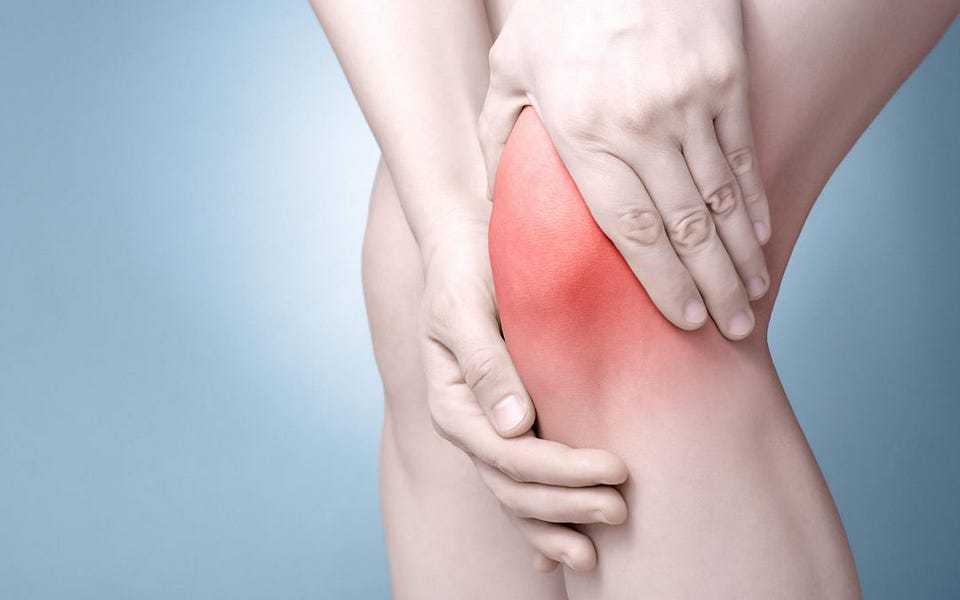
Arthritis is a pain... literally.
For patients, osteoarthritis represents an unsolvable abyss of pain. The reality of continued pain, worsening mobility and an ever growing waiting list for referral flashes before their eyes.
For clinicians, osteoarthritis represents one of the few truly, unsolvable cases - especially in primary care.
Pain is subjective in origin, but is even more subjective in osteoarthritis. There are those with severe arthritis who are in minimal pain whilst there are some with mild arthritis unable to walk. I've personally seen a lot of patients with osteoarthritis and I manage them as per the recommendations by NICE. However, it's only recently I've started to question the treatment logic. Here's why..
In a meta-analysis published by The Lancet00122-4), 31 trials (n=4241 participants) which analysed the role of exercise in arthritis were reviewed. It questions the role of exercise, as a “one size fits all” measure for patients with arthritis.
You see, exercise has become a buzzword but recommending exercise in certain conditions may not always be the best approach. Often it becomes about cost. Telling a patient to do some exercise is cost effective. It means no joint injections, no tablets and no surgery. Easy.
This meta-analysis was interesting. It found that effect of exercise on pain and physical function is “small” and is of "questionable clinical importance."
So why have we been recommending mild exercise for everyone? Simple. Pain is quite subjective and most of those with mild-moderate arthritis don't bother getting diagnosed. This means most of the studies done on the role of exercise in patients with arthritis are on those with severe arthritis, a subgroup in which exercise IS effective.
There's also another issue - nobody including NICE tells us how much exercise to recommend. Is it one hour? running? walking? pilates? doing some chores? It's because clinical studies haven't actually focused on particular exercises so we've been left to our own devices as clinicians
This study only found people with severe osteoarthritis to benefit most from exercise. Does this mean there are other factors that determine the effect of exercise too? What about age, BMI, exercise experience?
The recommendations from this study include adopting a characteristic based treatment mechanism. This is called stratified care. We live in a medical age where we are able to differentiate between groups based on genetic and environmental factors. We even have some of the tools necessary to look at bone cortical make up. Perhaps these need to be utilised for more relevant treatment?
Of course this doesn't mean we should stop advocating for exercise. In patients with mild to moderate osteoarthritis we should be actively offering additional analgesia and the old-school RICE (rest, ice, compression, elevation) treatment. However, we may find that our recommendations become streamlined over time and patients are offered more "bespoke" treatment options. This is the future.
No pain, no gain I guess.
Check us out on our various pages
Website: www.paretoeducation.co.uk
Instagram: www.instagram.com/pareto_ed
Twitter: www.twitter.com/pareto_ed
Youtube: https://bit.ly/3DPm23c
Email: paretopaeducation@gmail.com
Originally published on Substack.


