
Flu is back with a BANG
Why this winter is going to be different (in a bad way)!
My wife asked me about my week. I told her it was full of coughs, colds and hospital admissions.
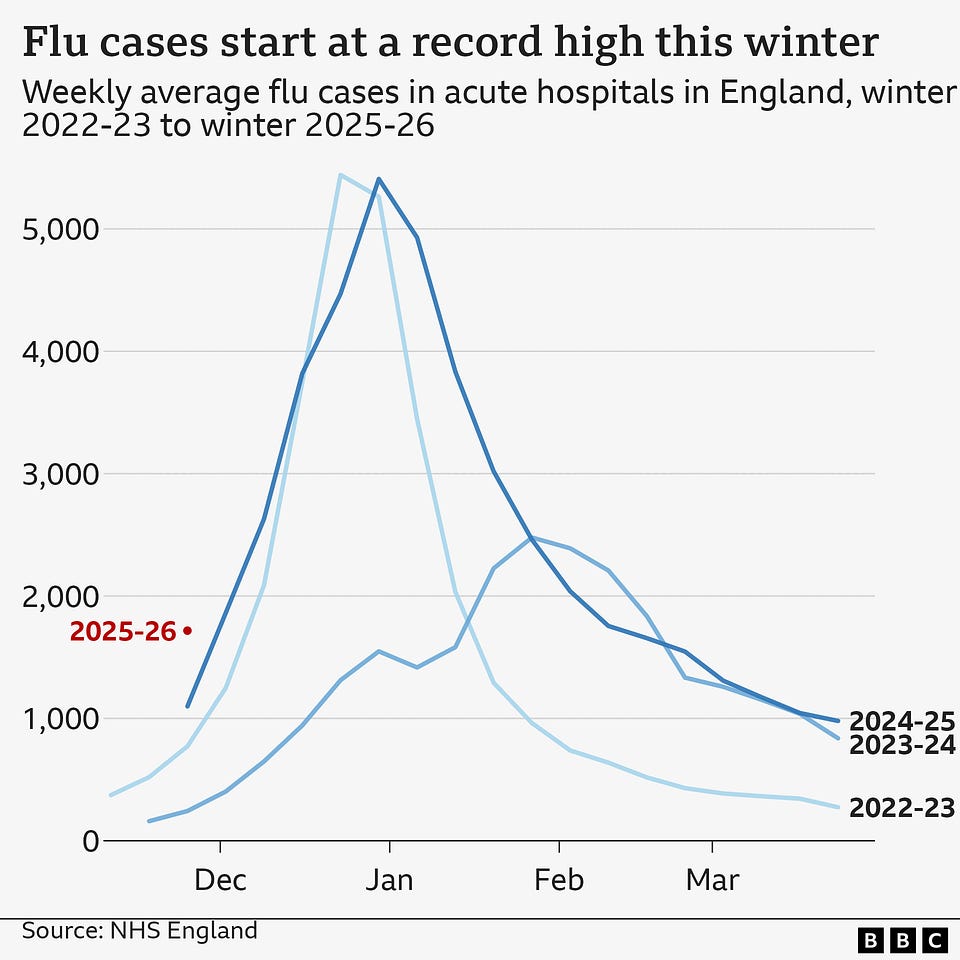
The demand for appointments at my practice has been incredibly high and it seems that’s the case across the country. According to the latest national surveillance, activity for Influenza has risen sharply and that rise is now hitting hospital wards, respiratory hubs and general practices across the country. Here’s a snapshot and remember, we’re not even at the height of winter yet (below are some figures from articles)
- GP consultations for influenza-like illness (ILI) have increased: the weekly ILI consultation rate rose to 13.2 per 100,000 registered population, up from 8.5 the previous week.
- Hospital admissions for influenza are climbing rapidly — the weekly admission rate rose to 7.79 per 100,000 (from 4.78 the week earlier).
- In real-world terms: in England alone, recent reporting shows an average of 1,717 flu patients in hospital beds each day last week — a 56% increase over the same period last year.
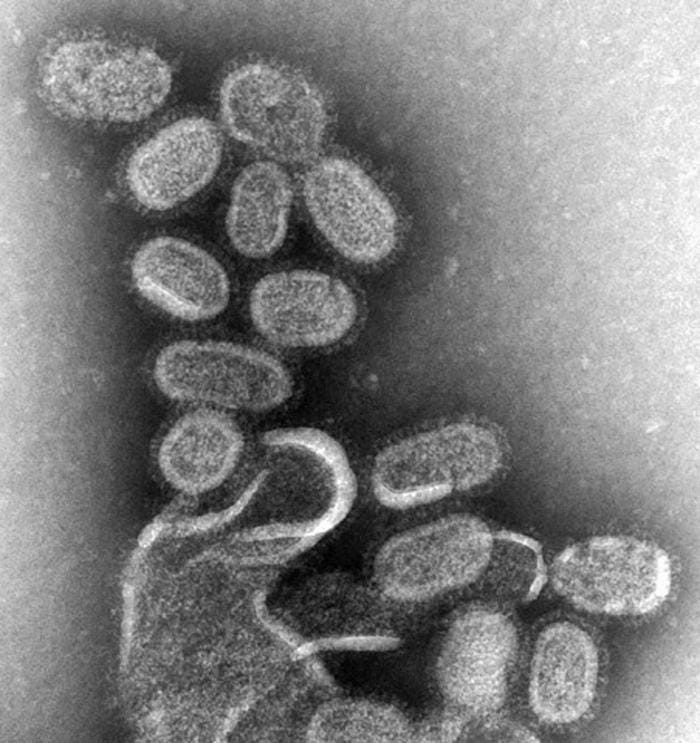
It’s not just influenza as COVID19, rhinovirus, RSV and other fatal viruses are also on the rise. This “quad-demic” means that as clinicians, we need to be prepared to identify, treat and refer patients in good time.
Right.. So How Do We Prepare?
Much of the literature and guidance is being focused around early decision-making. This is to manage the flow of sick patients throughout the health system. Respiratory hubs are popping up across the country and new protocols are being released.
The focus on early intervention becomes more important as mortality due to respiratory illness is rising in “at-risk” groups. Older adults, young children, pregnant women and those with chronic illness’ are the priority. So how we do navigate ourselves as clinicians in this climate?
Not to sound cliche but NICE guidance holds the answer. Most patients can be managed at home with simple measures - fluids, antipyretics and some tender, loving care. Remember, even simple cases can make patients feel horrid. Be sure to empathise with patients with effective safety netting. It’s easy to get frustrated when patients re-present with the same cases but this year, flu is particularly bad.
For the at-risk groups described above, NICE advises admission when;
There is worsening of a pre-existing medical condition (e.g. chronic lung disease exacerbated by flu)
Suspected or confirmed influenza-related pneumonia — new or worsening breathlessness, dyspnoea, signs of lung involvement (e.g. crackles, low oxygen saturation)
Other serious complications or red-flag symptoms: for example, difficulty breathing at rest or on minimal exertion, haemoptysis (coughing up blood), confusion or altered mental state, prolonged high fever, or re-emergence of fever after a period of improvement.
Furthermore, don’t forget the tools you have at your disposal and here I don’t mean your SATs probe. It may be tempted to look at a patient who looks miserable and think “oh no, he/she needs admission.” Old school scoring criteria like CRB-65 is particularly helpful. Even FEVERpain scoring can help with patients presenting with sore throats.
Needless to say that none of these scores replace clinical judgement. We live in a complex world and if you suspect that an elderly patient won’t be able to manage at home then consider services like the virtual ward service who can manage the patient in their own home. If social issues such as housing or heating is a concern then be sure to utilise social prescribers.
Local guidance is also vital in this case. In hospital there is a push to prescribe Tamiflu
(Oseltamivir) for confirmed cases via POCT. This is typically started within 48 hours of initial presentation. We might not have access to POCT in primary care but we do have effective history taking, scoring criteria and good ol’ clinician gut. Don’t be afraid to refer a patient if you need to.
Finally - the flu vaccine. Controversial in some circles but known to be an effective defence against flu. Advise patients who are eligible to take up the vaccine as it seems initial results show that this years vaccine is proving quite effective.
I hope this update has been useful. I guess my experience in primary care and A&E puts me in decent stead to advise. Wish you all the best in managing patients in this very challenging climate.
Until next week…
How to NOT get sued as an NHS clinician
This video is doing the rounds and for good reason. This short conversation between Kameel and Tracy Fields, an expert medical witness sheds light on common reasons for clinicians being taken to tribunal and how we can ensure we avoid such stressful situations. We cover:
- Understanding the medico-legal process: what happens when a case goes to court
- Common clinical pitfalls that lead to negligence claims
- How expert witnesses support the legal system — and clinicians
- Documentation, consent, and communication best practices
- Practical advice to safeguard your professional reputation & mental wellbeing
You can watch the video for FREE here.
CPD MSK Masterclass (Re-arranged) -
Good news - there are still some spaces available for our MSK Masterclass which is due to be held on Sunday 14th December from 10am - 1pm. Mr Kiani (physiotherapist and trainee ACP) will be speaking on a number of subject matters to help enhance your confidence in the diagnosis, assessment and treatment of musculoskeletal disorders. Some of the subjects include:
This masterclass will cover the following topics:
- Clinically oriented anatomy
- Acute MSK disorders
- MSK pathology in the elderly and prescribing practice
- Adjuvant therapies including joint infections and complementary therapies
- Arthritis including inflammatory arthritis & referral.
As part of this online webinar you will receive:
- Live access - Certificate with 3 CPD points
- Recorded access for 60 days to watch ON-DEMAND
Website: www.paretoeducation.co.uk
Instagram: www.instagram.com/pareto_ed
Twitter: www.twitter.com/pareto_ed
Youtube: https://bit.ly/3DPm23c
Email: info@paretoeducation.co.uk
Originally published on Substack.


