
Modern Surgery: An Online Multiplayer Video Game (Not Quite)
Looking to learn/refresh your Asthma/COPD knowledge?
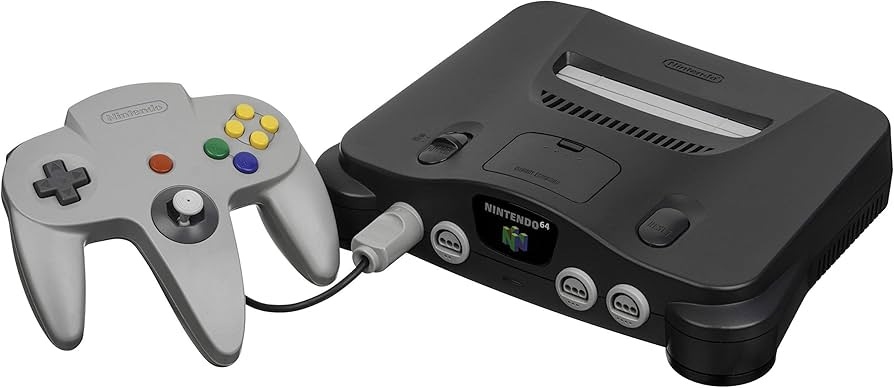
Think back to how games used to work when we were kids.
First, it was simple: a football in the park, tag in the playground, maybe a board game on the living room floor. Everyone had to be there physically. If your friend lived three streets away, you walked there. Those were the days - good ol’ organic relationships.
Then came the first shift: video games. Suddenly we were playing together on the same console with two controllers, one screen, lots of shouting when someone pressed the wrong button. But you still had to be in the same room. I remember playing Nintendo 64 - Mario kart, Super Smash Bros and Zelda. Playstation was another evolution. For those who have no idea what I’m talking about... I’ll stop now.
After that came the internet era which in many ways is the current era. Whether fortnight or call of duty, you can play someone in another city or in another country. We’re now able to collaborate with people on the opposite side of the world.
Add in headsets, and the experience changed again. Now you could talk in real time, coordinate strategy, and work together despite being thousands of miles apart.
Medicine has followed a very similar path and surgery is the perfect example...
A Real-World Milestone: Surgery From 1,500 Miles Away
A recent case highlighted just how far surgical technology has come.
In March 2026, 62-year-old Paul Buxton, a prostate cancer patient living in Gibraltar, underwent a prostate removal operation performed by a surgeon who wasn’t even in the same country. The surgeon Professor Prokar Dasgupta was sitting at a robotic console in London, roughly 2,400 kilometres away.
I remember seeing robotic surgery in its early days at St George’s Hospital in London. The use was the same, for prostate cancer removal but to now see it so advanced is a real eye opener. Robotic surgery has advanced so much and reading about the details concerning the operation on Mr Buxton are profound. Here’s a summary,
In the operating theatre at St Bernard’s Hospital in Gibraltar, a surgical robot carried out the procedure. Meanwhile, in London, the surgeon controlled the robot remotely using a console connected through high-speed fibre-optic networks with a backup 5G connection.
The lag between the surgeon’s hand movement in London and the robot’s response in Gibraltar?
Just 0.06 seconds .. essentially instantaneous from a human perspective.
A full surgical team was still present in the theatre in Gibraltar in case the connection failed or if they needed to take over, but the procedure went smoothly. Four days later, Buxton reported feeling “fantastic”.In other words, surgery has just had its “online multiplayer” moment.
It’s not quite AI or automation...
When people hear “robotic surgery”, they often imagine a surgeon playing something like Call of Duty or FIFA with surgical tools.
That’s… not quite how it works. The robot doesn’t operate independently. It doesn’t make decisions. And there’s no artificial intelligence doing the cutting.
Instead, robotic surgery is really robot-assisted surgery. The surgeon sits at a console and controls small instruments attached to robotic arms. The system translates the surgeon’s hand movements into extremely precise micro-movements inside the body.
Key features include:
- 3D high-definition vision inside the body
- Instruments that rotate more than a human wrist can
- Motion scaling (large hand movements become tiny instrument movements)
- Tremor filtration that removes natural hand shake
The robot is basically an ultra-precise extension of the surgeon’s hands.
Think of it less like a video game and more like a surgical exoskeleton with microscopic precision.
There’s training involved. Surgeons first complete many years of traditional surgical training, often over a decade, before learning to use robotic systems. They then undergo dedicated simulation training, followed by supervised procedures with experienced robotic surgeons and a gradual progression to more complex cases. Mastering robotic surgery involves adapting to different ergonomics, three-dimensional visual perspectives and highly precise instrument control, and many surgeons undertake additional fellowships to become proficient. In short, operating a surgical robot is a highly specialised skill developed through years of training — not something anyone moves into overnight.
Where Remote Surgery Could Go Next
The Gibraltar case is exciting not because robotic surgery is new but because distance is no longer a barrier. For those of who might not be aware, I have a deep interest in global medicine. Robotic surgery can breakdown huge barriers and contribute to global health initiates.
If the technology continues to mature, remote surgery could potentially be used in situations like:
Remote or island communities Specialist surgeons could operate without patients needing to travel hundreds or thousands of miles.
War zones or disaster areas Experts could assist surgeries from safer locations.
Space exploration NASA has long considered telesurgery as a potential option for treating astronauts on long missions.
Specialist global surgery networks A world-class surgeon could theoretically operate on patients in multiple countries in a single day.
There are still hurdles of course; reliability, latency, legal frameworks, and cost but the technology is moving quickly.
Conclusion
The evolution of gaming offers a useful way to think about how connected technology has changed the way we interact. It began with everyone needing to be in thesame room to play together, then moved to sharing the same console, before shifting online where players could compete with others anywhere in the world. The addition of headsets broughtreal-time communication across continents. Surgery appears to be following a similar trajectory. Traditionally, the surgeon had to stand at the operating table, but robotic systems have since enhanced precision and control. Now, remarkably, the surgeon doesn’t even need to be in the same country as the patient. The operating theatre has quietly become one of the most technologically advanced environments in modern medicine and this may only be the beginning.
CPD Asthma/COPD & Spirometry Masterclass
Join us for 3-hour course giving you the skills you require to better diagnose, investigate and manage respiratory conditions. We will cover:
- Diagnosis of respiratory disease: spirometry, FeNo and CT scans
- Interpretation of lung function tests (spirometry, peak-flow)
- Latest BTS/NICE guidance on COPD and asthma management
- Interstitial Lung Disease and Pulmonary Fibrosis
This will be delivered by our special guest speaker - Dr Shayan Khan MBBS, MRCP - Bradford Royal Infirmary
Date: Sunday 12th April - 10am - 1pm
Remember.. if you can’t make it - the full event will be recorded for future viewing.
You will also receive an external accredited CPD certificate
Originally published on Substack.


