
My Reflections Working in Urgent Care...
A unique setting requires a unique skillset
When I first qualified as a GP, I imagined a career rooted in continuity.
I’ve been engaged in building long-term relationships, managing chronic disease, walking alongside patients through the seasons of their lives. And that’s exactly what I found in general practice. Diabetes reviews, asthma plans, hypertension optimisation — the deeply valuable, steady work of primary care.
But if I’m honest, there was always something tugging at me.
Before becoming a GP, I spent several years working as an A&E registrar. Those years shaped me in ways I didn’t fully appreciate at the time. The pace. The unpredictability. The decision-making under pressure. The intellectual challenge of acute presentations. I loved it. I also think there are others like me - we’re a particular “breed” of clinician.
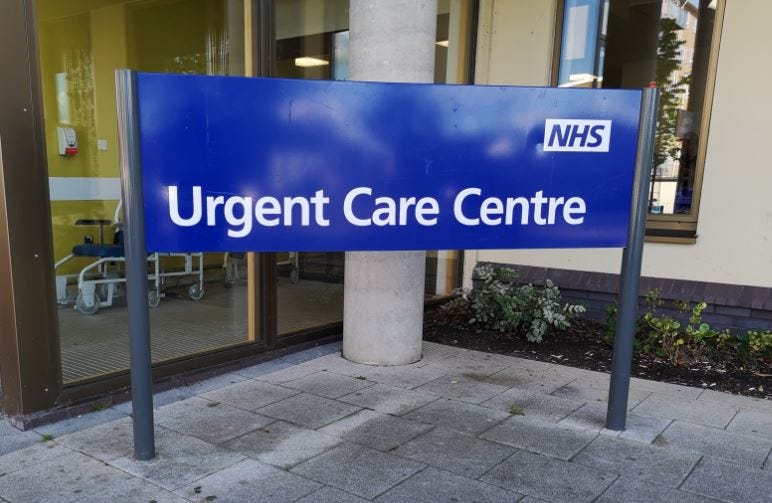
So eventually, I signed up to work in an urgent care centre and now, I work there regularly.
Urgent care sits in that fascinating space between general practice and emergency medicine. On any given shift I might see:
- Chest pains that need careful risk stratification
- Fevers and infections that could be self-limiting… or not!
- Skin conditions that range from mildly irritating to potentially serious
- Injuries: fractures, sprains, lacerations
- Abdominal pain, headaches, shortness of breath
Every case demands focus.
Unlike chronic disease reviews, urgent care relies on precision.
Focused history taking.
Targeted examination.
Identifying red flags quickly.
Deciding what absolutely must not be missed.
I find myself constantly using scoring systems and structured approaches whether that’s risk stratifying chest pain, assessing sepsis risk, applying head injury criteria, or deciding whether imaging is warranted. Every investigation needs justification. Every referral needs reasoning. And sometimes the most important decision is whether a patient can be safely managed in urgent care or needs transferring to the main ED.
That balance is where the real skill lies.
However, it’s not all rosy.
There’s the responsibility of ensuring the patient in front of you is safe. There’s the self-confidence required to discharge appropriately. There’s the discipline to not over-investigate or over-refer simply because it feels safer. And there’s the humility to escalate when needed.
It’s a constant calibration… Am I missing something?Am I over-medicalising? Is this safe? Can I go home with my conscious clear?
When you get it right, there’s immense professional satisfaction. When you’re unsure, it pushes you to refine your practice even more. It truly is a skillset of its own.
Because unique contexts require unique skillsets.
Why We Built the Urgent Care Masterclass
Working in urgent care reminded me how different it is from both traditional general practice and full emergency medicine. You need the breadth of a GP, the decisiveness of ED, and the judgement to know where the boundaries lie.
That’s why we’ve revisited and improved our Urgent Care Masterclass.
We’ll start with the core principles governing urgent care — the mindset, the risk thresholds, the art of focused assessment. From there, we’ll work through a mixture of acute presentations using practical case scenarios. Chest pain. Acute infections. Head injuries. Abdominal pain. Dermatology. And more.
This isn’t theoretical medicine.
We’ll draw on:
- Real-world experience
- Academic research
- Up-to-date national guidance
- Practical, usable tips you can implement immediately
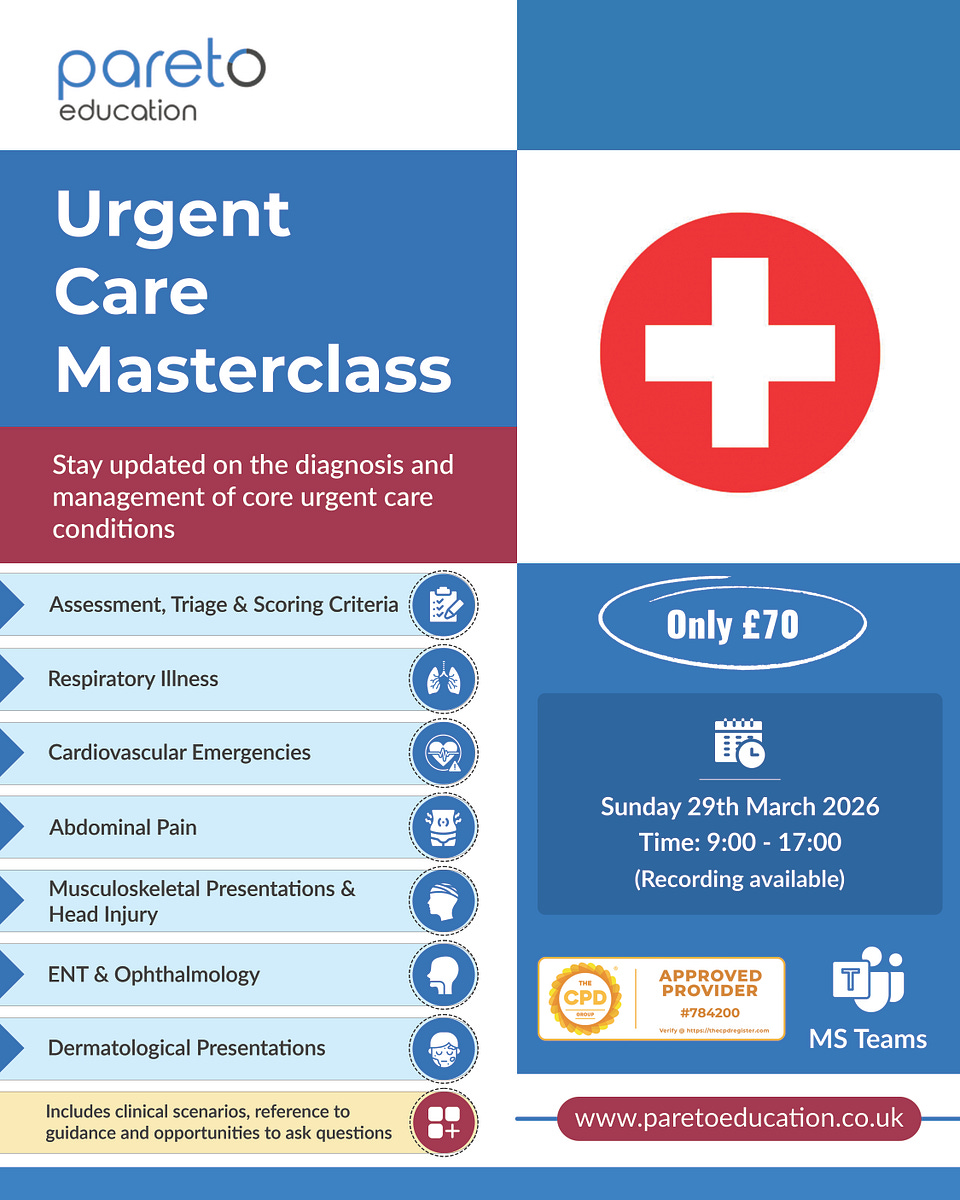
It’s designed to be a full, immersive day of learning — with plenty of breaks (because attention spans matter!), delivered online and available as a recording if you can’t attend live.
And yes… it’s externally accredited, giving you 6 juicy CPD points. You can sign up here.
A Final Note
Urgent care is growing. The demand is rising. The interface between primary care and emergency departments is becoming increasingly important.
Whether you already work in urgent care or are considering stepping into it, developing confidence in acute decision-making changes how you practise medicine everywhere.
For me, it’s been energising. It’s sharpened my clinical reasoning. It’s reconnected me with that part of medicine I’ve always loved ; the moment where uncertainty meets judgement.
And I suspect I’m not the only GP who feels that pull.
If you’re curious about urgent care or want to feel more confident managing acute presentations… I’d love for you to join us!
Let’s refine the skillset together.
Recognising Acute Deterioration in Patients with Chronic Illness’
The questions raised in this issue around judgement, nuance, and early risk detection are central to our upcoming Urgent Care Masterclass.
Alongside it, our session “Worried About Missing Deterioration in Patients with Chronic Disease?” is available as a FREE YouTube video, so clinicians can access practical learning immediately.
Designed for GPs and the wider primary care team, it explores:
- When “normal for them” is no longer normal
- Using NEWS2, observations, and clinical judgement effectively
- High-risk scenarios including diabetes, COPD, heart failure and CKD
- When and how to escalate safely
If we are serious about improving outcomes in urgent care, sharpening our ability to recognise subtle deterioration before crisis develops is one of the most powerful skills we can build.
You can watch the full session free on our YouTube channel and begin applying the principles straight away.
Originally published on Substack.


