
NHS 10-Year Plan - Urgent Care Edition
How UTCs will become an INTEGRAL arm of the NHS
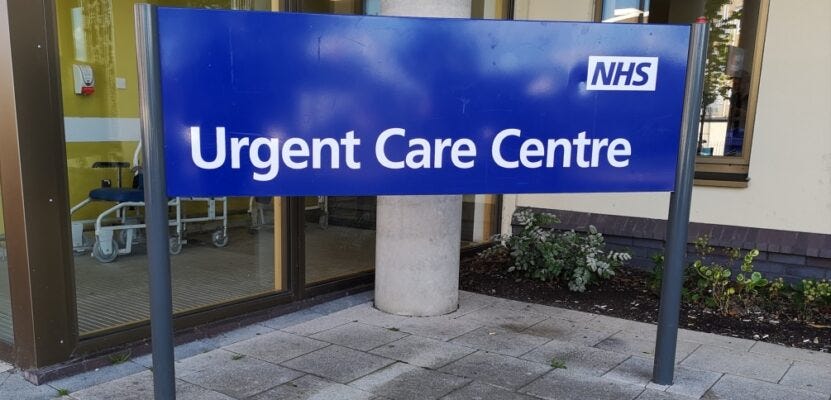
We recently published a newsletter on the NHS 10-Year Plan, which highlighted a renewed focus on primary care and disease prevention. Around the same time, another report was released—this time focusing on acute care—titled the “Urgent and Emergency Care Plan 2025/26.”
There’s a growing recognition that a simple binary of primary and secondary care is no longer sufficient. Relying solely on general practice and accident & emergency departments as the front doors to the health service is proving unsustainable, particularly as patient numbers continue to rise. This model also contributes to a poor patient experience, with increasing wait times for ambulances, referrals, and hospital transfers.
The concept of urgent care has emerged as a successful bridge between these extremes. Urgent Treatment Centres (UTCs) have been established across the country, offering effective access for minor illnesses and injuries, reducing pressure on emergency departments, and decreasing the number of hospital admissions. This has led to streamlined costs and improved patient satisfaction.
As a result, the NHS has pledged continued investment in both urgent care centres and the development of the urgent care workforce—from ambulance crews to front-line assessing clinicians. The plan makes this commitment abundantly clear. Here are some key targets that are certainly cause for optimism:
- Reduce ambulance transfer times for life-threatening presentations—including stroke, myocardial infarction, sepsis, and traumatic injuries—by 14%, through better staffing and smaller geographic coverage areas per team.
- Expand the capacity of urgent care and same-day emergency care (SDEC) services with a £370 million investment.
- Establish mental health crisis pathways within urgent care settings to allow for immediate, on-site support.
- Improve integration of clinical records across primary care, ambulance services, and secondary care—enabling faster, more informed decision-making.
- Implement live data monitoring through dedicated data centres, allowing triage services to direct patients in real time to services with available capacity.
- Enhance access for Urgent Care Practitioners to community-based services, including frailty teams and neighbourhood health services.
Urgent care centres are receiving widespread support from professional bodies, including Royal Colleges such as those for Psychiatrists, Emergency Medicine, and General Practice.
Currently, there is no standardised national training pathway for becoming an Urgent Care Practitioner, but we anticipate significant growth and recruitment in this area. Some roles will focus on direct clinical care in urgent care centres, while others will involve overseeing referral, treatment, and discharge pathways more broadly.
All in all, this document was an intriguing read. Services such as virtual wards for older adults, SDEC, and urgent care centres are set to become the norm across the country. There is strong scientific and operational justification for their expansion, and we expect this area to offer exciting new opportunities in the near future.
Watch this space!
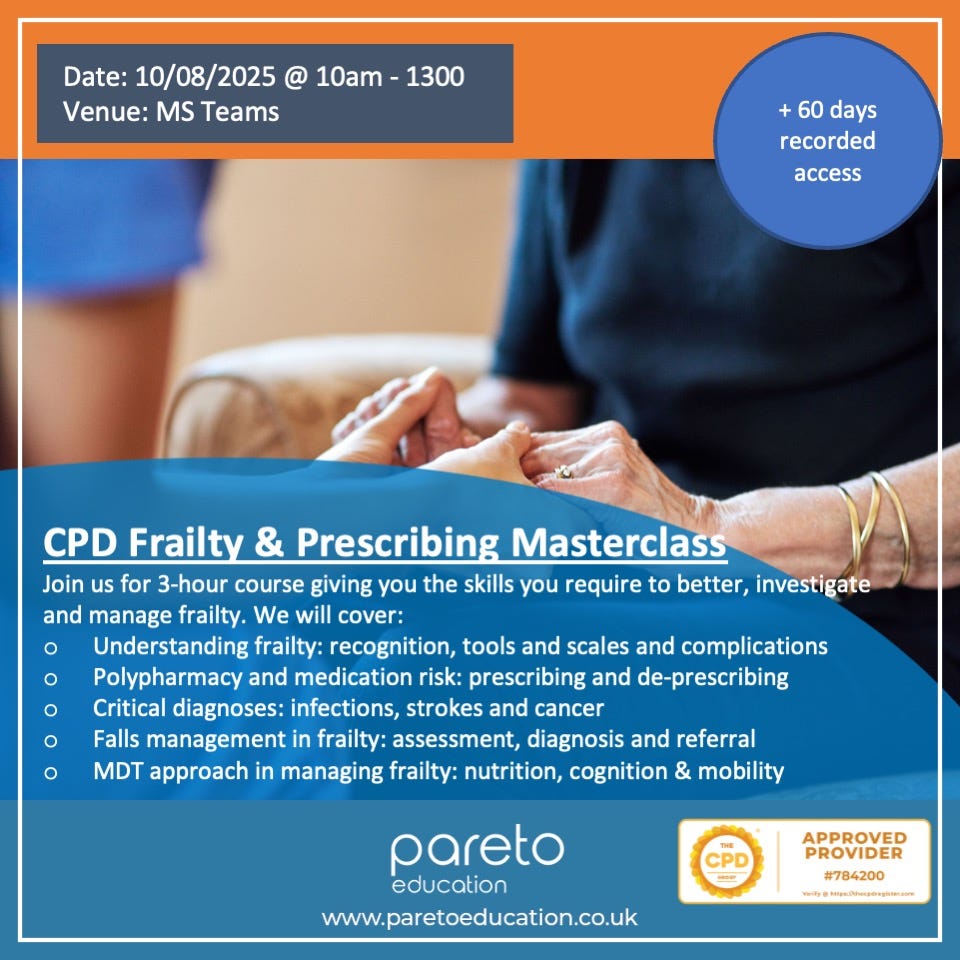
Special Guest Lecturer for Frailty & Prescribing Masterclass
We’re proud to announce a special guest lecturer for our upcoming Frailty & Prescribing Masterclass on Sunday 10/08/2025. I (Mo) will be joined by specialist community pharmacist Farzana Haq, also known as Pharmazana on social media. She’s a senior clinical pharmacist, independent prescriber and has extensive experience dealing with frail/elderly patients.

This masterclass will be delivered in true MDT spirit as both professional groups (doctor and pharmacist) will share their expertise on managing a complex and vulnerable group of patients. If you’re keen to join either the live course OR benefit from the recording, click here to learn more.
Website: www.paretoeducation.co.uk
Instagram: www.instagram.com/pareto_ed
Twitter: www.twitter.com/pareto_ed
Youtube: https://bit.ly/3DPm23c
Email: info@paretoeducation.co.uk
Originally published on Substack.


