
School Holidays.. A Time When Other Issues Emerge
CPD Chronic Illness' Masterclass on Sunday!!
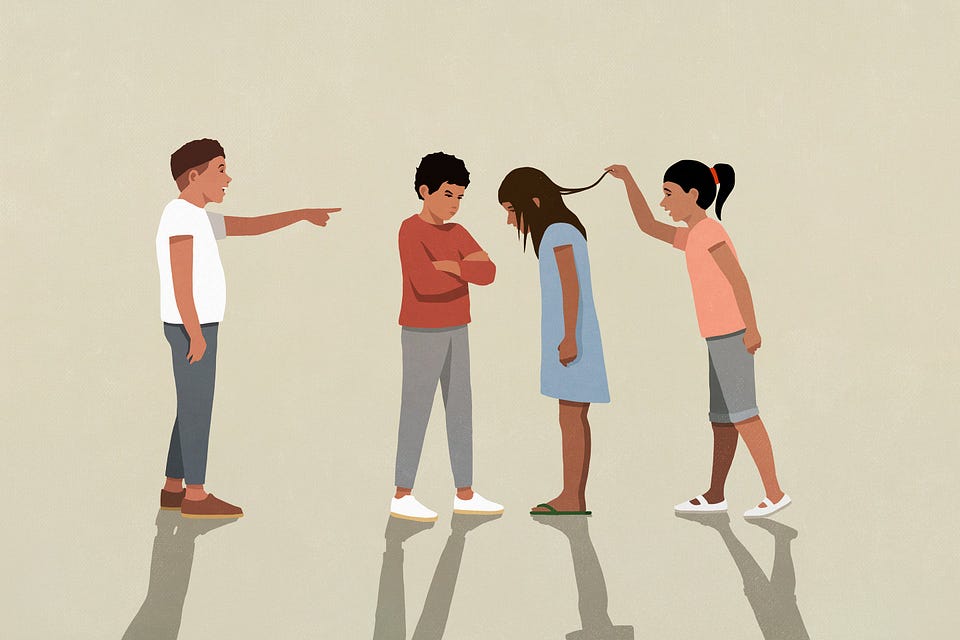
Bullying. We are all aware of it and some of us have even been the subject of it. Bullying is known to be linked to a number of long-term health issues.
Classed as an Adverse Childhood Experience (ACE), bullying, particularly during the teen and adolescent years, has been linked with both psychological and physical ill-health.
For many children, school holidays can be a respite from a number of traumatic experiences. However, this is not the case for everyone.
Let me tell you about a recent case where I spoke to you a girl adolescent girl in clinic. Her mother had brought her in due to concerns about reduced eating and rapid weight loss. Her mum mentioned that she would make her food, but the patient would take a few bites and leave it. She was indeed underweight. Her BMI was 17, and she was incredibly thin.
She was very pleasant and very confident. She told me that she would have lunch at school, particularly when they served chicken sandwiches. She never really had time to have breakfast, and she would eat dinner depending on whether it was to her taste.
There was no history of anxiety or depression. She was quite a high performer at school according to her mum and had a good network of friends. She had regular periods, and while she accepted that she was underweight, she felt there was no issue with this. She felt well in herself and wondered why her mum had brought her in.
Everything checked out. This patient was significantly underweight but otherwise was very well. Anyway, we decided to refer the patient to a dietitian who could provide her with some support with eating, and I asked the patient to rebook an appointment with me in a few weeks.
A few weeks later, the patient came again with her mum. There was very little progress, but her mum decided to take some time off work to try and work with the patient to address her diet. I once again asked whether there was anything going on at school that could have contributed to the patient’s eating habits, and she told me school was fine. Things still did not add up.
I asked her about what she did in her spare time. One of her hobbies was gaming. I am in my thirties, and she probably thought this doctor has no idea about gaming. Wrong. I quite enjoy playing video games. She was into Fortnite and had friends on Fortnite. It turned out that these friends were not the typical friends people would have.
The patient would have virtual meetups, and she mentioned they spoke about all sorts of things. Video games, favourite drinks, celebrities, food, sex, all sorts. It turned out that those in the meeting room, who were from different parts of the world, could be quite mean. They would often remark that the patient was overweight, needed to eat less, and was not attractive.
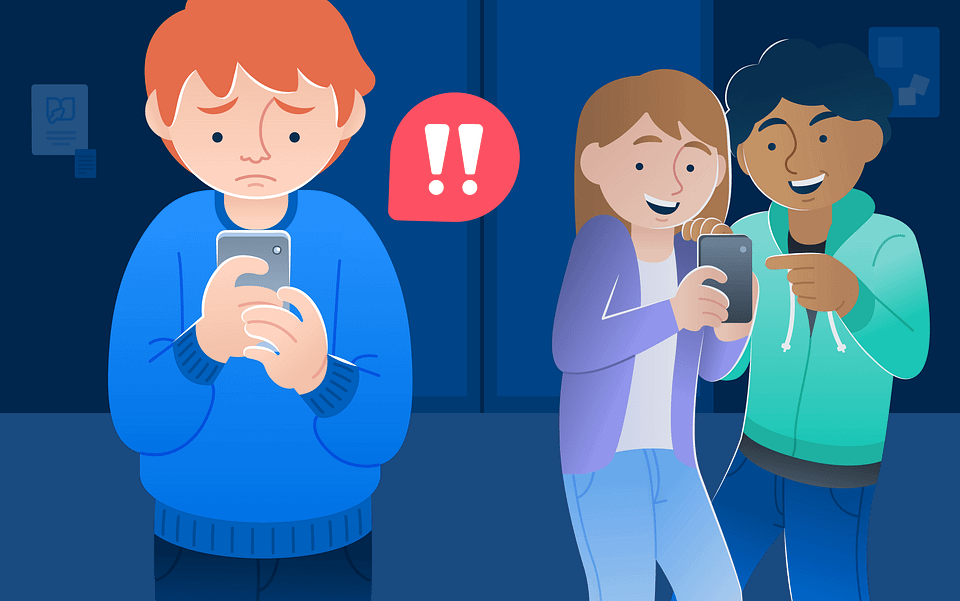
These are devastating things for any young girl to hear. Her mum did not know about this, and it took two consultations to get to this point. I mention this case because it really did stick with me. The virtual world is a world that is unknown to most of us. Scrolling culture is embedded in young people, and parental controls are simply not rigid enough for us to control what children are watching.
Many studies are surfacing looking at the impact of cyberbullying and psychosocial outcomes later in life. One qualitative study reported in BMC Public Health surveyed 2697 US youth and found a strong positive relationship between PTSD symptoms and cyberbullying. Cyberbullying can be more severe than playground bullying. Bullies can remain anonymous, fearing very little repercussion for their actions, and can employ a very severe approach in their bullying. There is a body of literature emerging on protective factors for bullying, such as personal resilience and strong family networks, but these are largely in their infancy.
So what did I learn from this case? Something clearly did not feel right to me. I felt that her low weight and lack of eating must have had some reason, as it seemed to have occurred in a vacuum. It took a number of attempts with varied lines of questioning to help uncover her deep and dark experience of cyberbullying, which she had almost become normalised to. I proceeded to refer her to the local mental health service and did some blood tests to assess any nutritional deficiencies due to her low BMI. Her mother became more aware of the wider context and it was likely that this patient will require prolonged therapy as she was bordering in both physical and psychological symptoms - signs consistent with anorexia nervosa.
Ultimately bullying has taken on another form, and it is vital that we are aware.
Until next time.
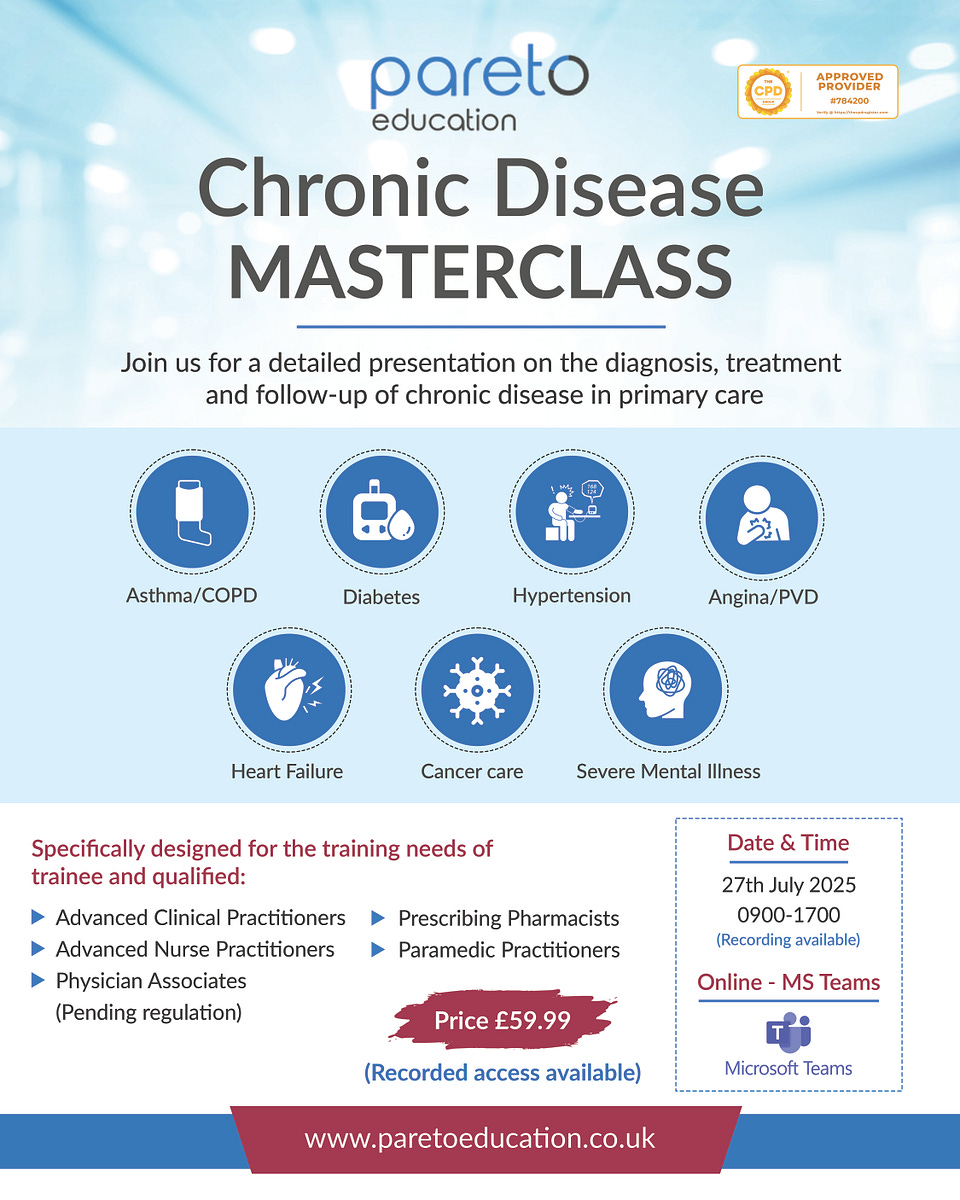
CPD Chronic Disease’ Masterclass
With an ageing population and increased complexity of diseases, the NHS has committed more focus to the prevention and management of Chronic Illness
This one day course is designed to provide a comprehensive review of the diagnosis, management, and multidisciplinary coordination of long-term conditions that significantly impact patient outcomes and healthcare resources.
It is intended for junior and experienced MDT professionals including ACPs, ANPs, physician associates, doctors, pharmacists, and paramedics.
As a bonus, we have mapped this course to the QoF (Quality Outcomes Framework) and have made reference to the systemOne and EMIS chronic disease templates.
Once again, this course will be recorded in FULL so you can watch later. You can book here
Managing Clinical Risk (FREE Video)
Frontline care is risky business…
“What if I've made the wrong diagnosis..?”
“What happened to that patient I assessed with xyz symptom?”
“Maybe I should go back and change the prescription.. what if something happens?”
Sound familiar? In a context in which investigations are difficult to obtain and there is a huge pressure to make decisions, our clinical decisions carry high levels of risk.
This video gives you a step-by-step framework for understanding and managing clinical risk in everyday clinical practice—without the jargon. We share simple strategies based on our experience as frontline clinicians
✅ What is clinical risk & why it matters
✅ Common risk areas: suicide, safeguarding, medicines, capacity & more
✅ How to document risk decisions clearly and defensibly
✅ Communicating and sharing risk within the MDT
✅ When to escalate, refer or involve safeguarding teams
Website: www.paretoeducation.co.uk
Instagram: www.instagram.com/pareto_ed
Twitter: www.twitter.com/pareto_ed
Youtube: https://bit.ly/3DPm23c
Email: info@paretoeducation.co.uk
Originally published on Substack.



