
Severe Mental Illness (SMI)
How to review this vulnerable patient group
There are many "bread and butter" consultations in primary care. Whether it’s an acute cough or cold or a long-term COPD review, you can expect at least one or two of these cases on your morning or afternoon list.
Mental health is another common theme, but I want to focus on Severe Mental Illness (SMI). This specific category of patients requires careful management and follow-up. Unfortunately, due to the nature of their conditions (which I will describe later), many do not attend their appointments. As a result, practices are required by ICBs (or whatever they will be called once disbanded) to implement stringent follow-up protocols to ensure these patients are not neglected.
So, what are the key issues we need to watch out for in this cohort of patients?
What is Severe Mental Illness?
This describes long-term conditions that significantly impact a patients ability to function in daily life. This might be difficult to conceptualise as many patients with low mood or anxiety espouse a similar impact on their life. However, typically, these patients have had a psychiatric diagnosis by a specialist and are often started on classes of medication that are beyond the scope of primary and secondary care.
These can include:
- First and second generation antipsychotics
- Complicated SSRI regimens
- Mood stabilisers such as lithium or sodium valproate.
As for the conditions themselves, they often include patients with a current or past history of:
- Schizophrenia & Related Psychotic Disorders
- Bipolar Affective Disorder (BPAD)
- Severe Depression with Psychotic Symptoms
- Severe Eating Disorders
- Severe Obsessive-Compulsive Disorder (OCD)
- PTSD & Complex PTSD (C-PTSD) with Severe Functional Impairment
Why are we so concerned with this class of patients?
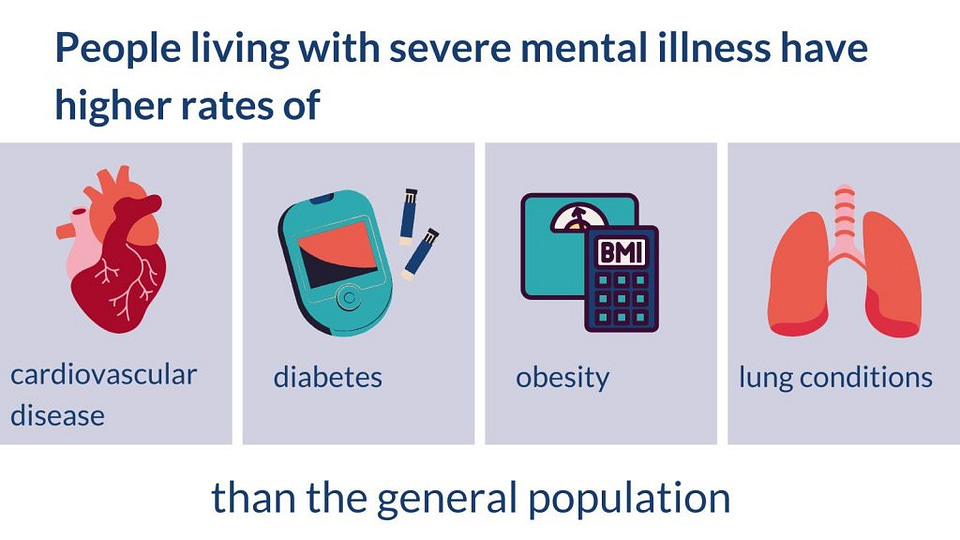
The reality is that severe mental illness (SMI) has a profound impact on a patient’s functionality. From relationships and family dynamics to activity levels and the ability to work, every aspect of their life is affected, even after remission. These patients often exhibit challenging behaviors, medication non-compliance, and poor lifestyle habits, making them particularly prone to secondary complications. This explains why patients with SMI, on average, have a reduced life expectancy of 15–20 years.
For the purpose of this newsletter, I want to focus specifically on conducting reviews for patients taking antipsychotics, as they make up the vast majority of SMI reviews.
What’s the deal with antipsychotics?
Nothing. They’re great. Well… they’re the main tool we have to treat patients with psychosis.

The leading hypothesis is that psychotic symptoms arise due to excess dopamine activity in the brain. Regulating dopamine levels can therefore help alleviate symptoms. Antipsychotics—both first- and second-generation—work by blocking dopamine (D2) receptors in the brain. Some newer antipsychotics also influence serotonin levels, providing an additional mood-stabilizing effect.
These medications are approximately 70% effective in reducing positive symptoms (e.g., hallucinations, delusions). However, around 30% of patients are either treatment-resistant or experience a relapsing-remitting course of illness. The main challenge with these medications is their side effect profile, which can significantly impact adherence and quality of life.
So what happens in an SMI review?
As part of an SMI review, it is important to assess both the social impacts of severe mental illness and the effects of medication. This involves the following:
1. Physical Health Checks
Patients with SMI, especially those on long-term antipsychotic medication, are at high risk of developing physical health conditions, including cardiovascular disease, diabetes, and obesity.
- Regularly monitor the patient’s weight, blood pressure, and enquire about lifestyle factors, including diet, exercise, and alcohol intake.
2. Medication Side Effects
- Since antipsychotics inhibit dopamine, patients may develop "Parkinsonian features", such as tremors, stiffness, and severe restlessness (akathisia).
3. Blood Tests & General Monitoring
- Annual blood tests are required to monitor for cardiovascular risk factors, including HbA1c and cholesterol levels.
- Clozapine monitoring: Patients on clozapine require regular full blood counts (FBCs) due to the risk of agranulocytosis.
- Prolactin levels: Antipsychotics can cause hyperprolactinaemia (due to dopamine suppression), so prolactin levels should be checked.
- Lithium monitoring: Patients on lithium require regular lithium level checks and thyroid function tests (TFTs)to monitor for thyroid dysfunction.
- ECG monitoring: All patients on antipsychotics should have an ECG to check for QTc prolongation, which increases the risk of cardiac arrhythmias.
4. Psychosocial Support
- After treatment for acute mental illness, patients are discharged to primary care for regular follow-ups. A major part of this involves ensuring they have adequate social and psychological support to help them reintegrate into daily life.
- Key considerations:Financial & social well-being: Enquire about housing, employment, and social support.
- Social prescribing: Refer patients to support services that can assist with integration and well-being.
- CBT referral: Consider referring patients to CBT programmes where appropriate.
- Safety netting: Always provide clear safety netting advice in case the patient’s condition deteriorates.
Those are some guidelines that I have extracted from NICE as well as my own practice. It can be very difficult to clearly demarcate our scope of practice in primary care and decide when to refer/re-refer back to psychiatry. It is for this reason, I’d like to point you out to our CPD Mental Health Masterclass which will help us become more effective in treatment mental illness.
We have invited Dr Case-Upton, senior registrar in general and forensic psychiatry who will be our speaker. Dr Case-Upton will be covering the following topics:
- Depression and anxiety including diagnosis, management and tips on drug selection.
- Schizophrenia: outpatient vs inpatient management, monitoring and when to re-refer
- Reviewing drugs in psychiatry – SSRIs, antipsychotics, TCAs and more
- Mental Health Sectioning and ethical considerations. Reviewing avenues of escalation
- ADHD diagnosis and management
Join us on Sunday 6th April 2025 from 10am - 1300. You will also be able to access the recording if unable to attend the LIVE event. All our masterclass’ are CPD accredited and you will receive a certificate for your portfolio.
You can read more about this course here
Website: www.paretoeducation.co.uk
Instagram: www.instagram.com/pareto_ed
Twitter: www.twitter.com/pareto_ed
Youtube: https://bit.ly/3DPm23c
Email: info@paretoeducation.co.uk
Originally published on Substack.


