
SGLT2i - A Prescribing Update
Are you prescribing safely?
All medications undergo a series of phases where they are tested. From lab to animals to humans, this journey is highly regulated and it can take a number of years for medications to be released into the health service.
This is all good and well as once they are used in the mainstream, we can anticipate side effects. This pre-release testing allows us to structure our consultations and arrange follow up. However, when medications transition from niche use to large scale use like SGLT2i, the frequency of side effects that were previously held to be rare become much more common.
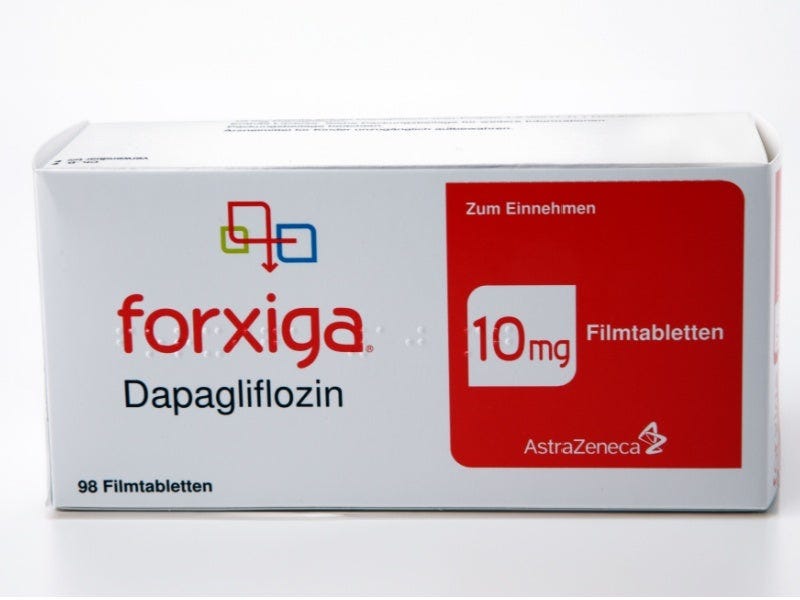
This is what’s happening with SGLT2i on the back of the latest NG28 guidance. It’s an excellent drug, conferring significant cardio-renal benefits hence reducing hospitalisation’s by up to 30%. It also helps patients lose weight and reduces Hba1c.
This is precisely why it is now first line along with metformin. The days of starting patients on metformin only are over. SGLT2i are mainstream and are mass prescribed which has bought to light some issues.
DKA in patients with a high HbA1c
I’ve seen some high HBa1c results in my career. 80, 90, 100 - those are some figures. With the increased prescription of SGLT2i in patients with T2DM, there has also been an increase in DKA as a side effect. The data supports this and supports the idea that patients with higher hba1c are more likely to suffer from SGLT2i induced DKA.
So how do we manage this especially as SGLT2i would be most useful in this patient group?
NICE has stayed silent on this so far. The NG28 update was only released in February so things need to be monitored. If you’re in the business of managing diabetes (like me) then there are some alternative treatment options to bring the HbA1c down BEFORE initiating an SGLT2i.
I have to credit this to Vicki Alabraba, a specialist diabetic nurse. Someone with HbA1c of >\= 75 mmol/mol could start of with a sulphonylurea (e.g Gliclazide) and once the HbA1c comes down significantly, you can introduce a SGLT2i whilst suspending the initial agent. You might call this overkill when the chances of having DKA are incredibly low. However, for those of you have managed patients with DKA - you’ll know it’s life threatening.
So for those who are managing patients with T2DM, it’s important to keep this in mind. Start those with high HbA1c with a drug like gliclazide and carefully introduce the SGLT2i.
Until next time…
Blood Gas Interpretation – On Demand Course
Looking to sharpen your confidence with blood gases? Our Blood Gas Interpretation course is designed for both students and qualified clinicians working in hospital settings. Covering both arterial and venous blood gases in detail, the course breaks down the essential physiology, introduces a clear, practical interpretation framework, and walks you through dozens of real-world case examples.

Delivered on demand, you can learn at your own pace and revisit the content whenever needed. You’ll also receive a certificate upon completion, along with a comprehensive eBook to help consolidate your learning.
Secure your place here: https://www.paretoeducation.co.uk/challenge-page/2aa3e0ee-02f5-4967-b933-12ef63e021dc?programId=2aa3e0ee-02f5-4967-b933-12ef63e021dc&participantId=undefined
Originally published on Substack.


