
Some Cases Stick With You...
+ A Word About Burnout and Stress
Some Cases Stick With You
…and define you.
You’ve probably heard this or even experience this before. This extends to investigations and diagnoses. For a long time, it was aortic dissection. I wrote about a case where a young woman had a dissection. I managed to catch it but it was too late - the patient passed away.
Since then, every chest pain presentation whispers aortic dissection. It’s hard to fight these voices and I often return to my previous experiences and at times, over investigate. The reality is that is part and parcel of my practice now. It’s part and parcel of my supervision, my teaching, my writing and my very essence.
For those of you who have been in a similar position, I’m sure what I’ve mentioned is quite familiar.
A gentleman in his early 60s attended the surgery complaining of a dull ache in his left upper abdomen that had been present intermittently for the previous 2–3 weeks. He described it as a nagging discomfort rather than pain, with no obvious triggers and no relationship to meals or movement. He denied any central chest pain, shortness of breath, palpitations, dizziness, syncope, nausea, vomiting, or diaphoresis. His bowels were normal, there was no history of trauma, and he otherwise felt well.
On examination, his observations were unremarkable. His abdomen was soft with minimal tenderness in the left upper quadrant, and his cardiovascular and respiratory examinations were normal. At first glance, nothing immediately suggested an acute cardiac problem.
But something didn’t quite sit right.
Before arranging investigations for a possible abdominal cause, I paused and asked myself a simple question: “What if this is actually a myocardial infarction?”
An ECG was performed.
To my surprise, it demonstrated new T-wave inversion in the anterior leads. He was referred immediately to hospital, where blood tests revealed a significantly elevated troponin. Further assessment confirmed the diagnosis of acute coronary syndrome (ACS).
Experience Isn’t Magic… It’s Built on Fundamentals
Looking back at this case, there was nothing miraculous about recognising that something more sinister might be happening.
It wasn’t intuition. It wasn’t luck.
It was the confidence that comes from repeatedly applying the fundamentals of clinical practice: taking a thorough history, performing an appropriate examination, using sound clinical reasoning, selecting the right investigations, interpreting those investigations correctly, and knowing how to act on the findings.
These aren’t isolated skills. Instead, they form an interconnected web. Weakness in one area can compromise every decision that follows. Conversely, strengthening each component makes you a safer, more confident clinician.
In this case, one skill changed everything.
ECG interpretation.
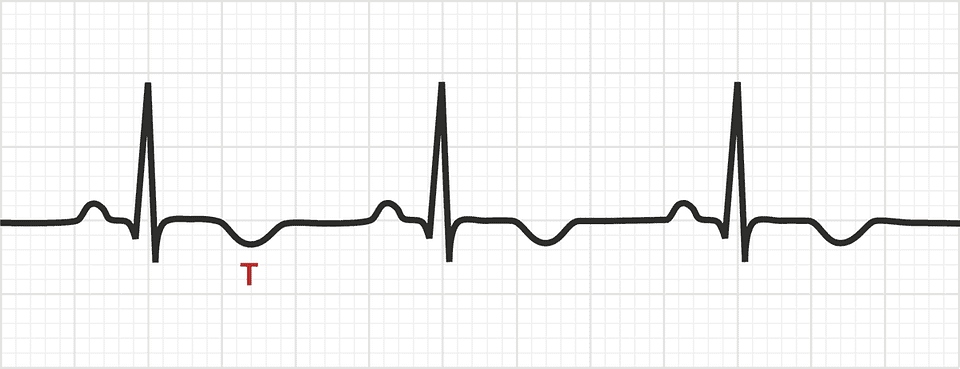
It is one of the commonest investigations performed across primary care, urgent care, emergency departments and hospital wards. Yet it remains one of the most influential diagnostic tools we have. A correctly interpreted ECG can identify life-threatening pathology within seconds, expedite urgent treatment, and quite literally save a patient’s life.
That is precisely why ECG interpretation is such a fundamental clinical skill that is not just for doctors, but for any clinician involved in assessing acutely unwell patients.
Master ECG Interpretation with Confidence
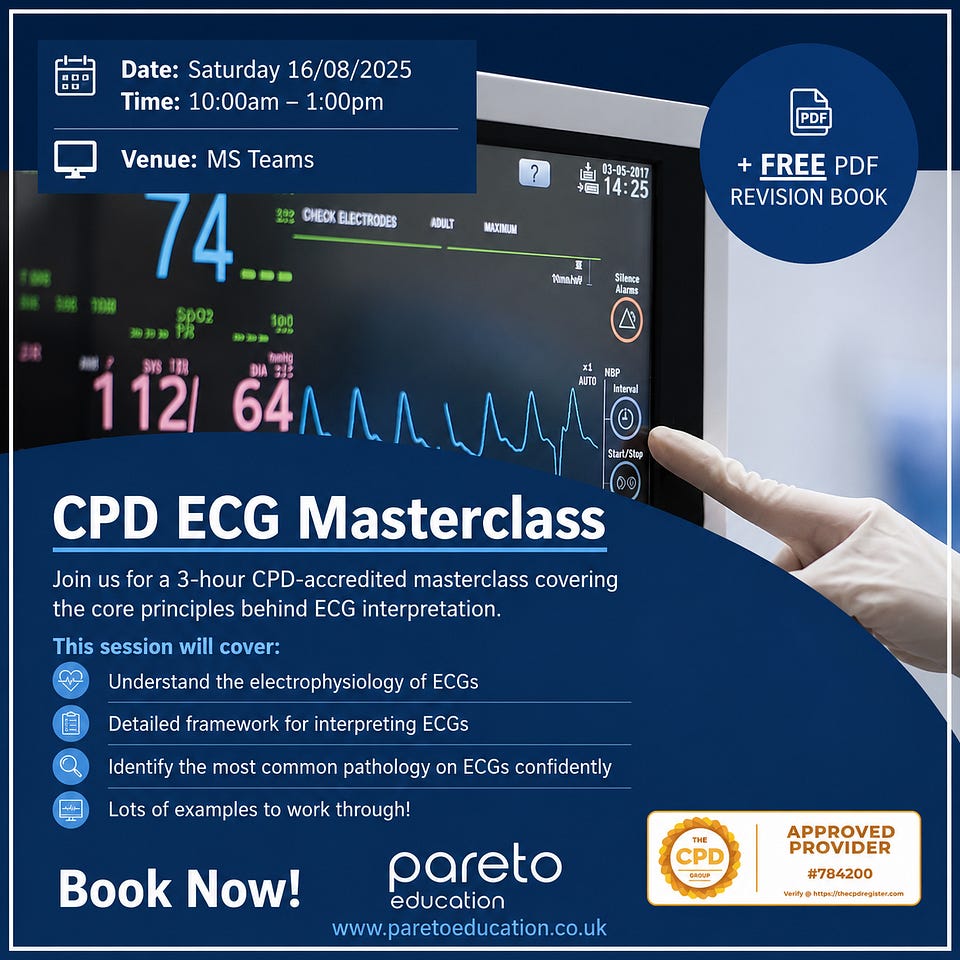
If you’d like to become more systematic and confident when interpreting ECGs, we’d love you to join our most popular CPD masterclass.
In this interactive 3-hour webinar, we’ll cover the essential principles that every clinician needs, including:
- Understanding the electrophysiology behind ECGs
- Applying clinical reasoning alongside ECG interpretation
- A structured, step-by-step framework for interpreting every ECG
- Recognising the most common ECG abnormalities with confidence
- Working through numerous real-life ECG examples, followed by an end-of-course quiz to consolidate your learning
Included with your booking
- 3 externally accredited CPD points
- 60 days’ access to the webinar recording
- ECG Made Easy e-book, written by Dr Mohammed Oomerjee
📅Date: Saturday 16th August
Who should attend?
This course is ideal for GPs, Advanced Clinical Practitioners (ACPs), Physician Associates (PAs), pharmacists, and other clinicians working in both primary and secondary care who want a practical, case-based approach to ECG interpretation that they can apply immediately in clinical practice.
Suffering From Burnout? Here’s a Word From One of Our Affiliate Organisations
Primary care has never been more demanding. Rising patient complexity, workforce pressures and increasing administrative burden mean that looking after our own wellbeing is no longer a luxury it’s essential for delivering safe, sustainable patient care.
GPMplus was created by Primary Care, for Primary Care, with one clear aim: to help individuals, practices and Primary Care teams build healthier workplaces, stronger cultures and greater resilience.

Whether you’re looking to improve staff wellbeing across your practice or seeking support as an individual clinician, GPMplus offers a range of practical services tailored specifically to the realities of Primary Care. Here's some core services they offer, in their own words of course…
Healthy Practice Programme (A good place to work and a good place to be a patient)
The Healthy Practice Programmes are designed to support you in ensuring your practice is a good place to work and a good place to be a patient. The programmes help practices create a working environment where staff feel supported, engaged and able to deliver the best possible care to patients. Whether you are looking to understand how your team is feeling, improve communication, or navigate periods of change, we offer three levels of support to help you build and sustain a positive practice culture.
See more in the Healthy Practice Programme brochure
Wellbeing & Speciality Courses (Strengthen your Foundation; Sharpen your Focus; Flourish through Learning)
Feeling overwhelmed by the demands of modern General Practice? Our wellbeing and resilience courses equip individuals and teams with practical skills, proven techniques and renewed confidence to thrive—not just cope—in challenging environments.
See more in our Wellbeing & Speciality course brochure
Mentoring & Coaching (Build you Foundation, find your Focus; Learn to Flourish)
If stress, pressure or life’s challenges are affecting your wellbeing, you don’t have to face them alone. Our mentoring and coaching programmes provide a safe, supportive and confidential space to help you build confidence, develop coping strategies and improve your overall wellbeing.
See more in our Mentoring & Coaching brochure
Originally published on Substack.


