
Testosterone, Libido & the Menopause: When is Oestrogen Not Enough?
Exploring vital guidance from the BMS to help address patient concerns
Some patients can really throw you off. I’m sure you know that feeling, that’s why my opinion sentence has intrigued you. Here’s a patient who threw me off recently..
A 53-year-old woman presented for a routine appointment. The appointment was about her libido. I proceeded to take a history and found that she was still having regular periods and was taking sequential HRT. This has successfully controlled her vasomotor symptoms but has done nothing for her low libido.
She informs me that she has experienced a profound loss of libido over the past year. Intercourse is no longer uncomfortable but she has little or no desire for sex. She explains that it is beginning to place a significant strain on her relationship with her husband and asks, “I’ve read about testosterone for women. Is it something that could help me?”
Loss of libido is one of the most common, yet often overlooked, symptoms reported during the menopause transition. While vasomotor symptoms frequently improve with hormone replacement therapy (HRT), sexual desire may remain impaired despite adequate oestrogen replacement. It can have a huge impact on a person's psychology as well as the state of any relationships they are in. Whilst testosterone replacement therapy (TRT) is popular amongst men, it is a highly underrated option in females.
We're going to understand the science behind testosterone replacement for restoring libido to help bring light to what is potentially a silver bullet.
The Science Behind Female Libido
Understanding the role of testosterone in patients with low libido requires an appreciation of the different roles that oestrogen and testosterone play in female sexual function.
Oestrogen primarily maintains the health of the vulvovaginal tissues. It improves vaginal lubrication, elasticity, blood flow and reduces dyspareunia by treating genitourinary syndrome of menopause (GSM). Consequently, oestrogen often improves the ability to have comfortable intercourse but does not necessarily restore sexual desire.
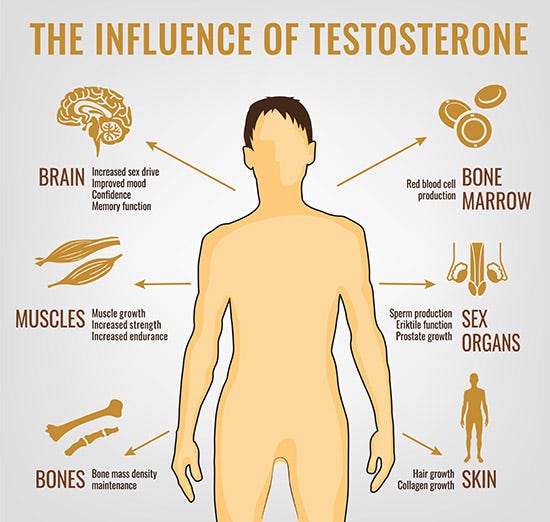
Testosterone, although present in much lower concentrations than in men, is produced by the ovaries and adrenal glands throughout adult life. Within the central nervous system it acts on androgen receptors involved in sexual motivation, reward and arousal. Testosterone appears to influence spontaneous sexual thoughts, desire, arousal and orgasmic response.
This distinction is clinically important: a woman may no longer experience painful intercourse following adequate oestrogen replacement, yet still report absent libido because the neuroendocrine drivers of sexual desire remain impaired.
Importantly, circulating testosterone concentrations correlate poorly with symptoms. There is currently no diagnostic testosterone threshold that defines androgen deficiency in women. Instead, treatment is based on clinical assessment rather than a “low” blood level.
What Does the Evidence Show?
The strongest evidence for testosterone therapy relates to postmenopausal women with hypoactive sexual desire disorder (HSDD) or persistent low sexual desire causing personal distress.
A landmark meta-analysis of randomised controlled trials involving more than 8,000 women demonstrated that physiological testosterone replacement significantly improved:
- Sexual desire
- Frequency of satisfying sexual events
- Sexual arousal
- Orgasm
- Sexual responsiveness
while also reducing sexual distress, with relatively few serious adverse effects when physiological doses were used.
Current international consensus and British Menopause Society guidance therefore conclude that the only evidence-based indication for testosterone therapy in women is persistent low sexual desire after optimisation of conventional HRT and exclusion of other contributory causes.
Great.. so maybe we should be giving testosterone to everyone?
Not quite. The BMS guidance is quite clear - testosterone should not be considered a routine third component of HRT.
Before prescribing, clinicians should ensure:
- Adequate oestrogen replacement has been achieved. This means that it might be time to change a patient onto a continuous preparation of HRT.
- Vaginal dryness or GSM has been treated (including local vaginal oestrogen where appropriate).
- Mood disorders, fatigue, chronic illness and medications have been reviewed.
- Relationship and psychosocial factors have been explored.
Many women experience improvement in libido once these factors are addressed.
Counselling & Monitoring Patients
Testosterone is not licensed for use in women in the UK, but male preparations are commonly prescribed off-label at lower physiological doses in line with British Menopause Society guidance. Ultimately, it is not our job to start testosterone - rather it is the role of a specialist menopause service/clinic.
Patients should be counselled that benefits are gradual, typically appearing after 8–12 weeks, with further improvement over several months.
Potential side effects include:
- Acne and oily skin
- Increased facial/body hair
- Rarely, irreversible effects with excessive dosing such as voice deepening, clitoral enlargement and androgenic alopecia
Current evidence does not support testosterone for improving energy, cognition, mood, muscle strength or preventing osteoporosis or dementia.
Before starting treatment, the following has to be ensured:
- Check baseline total testosterone (± SHBG where available). This is not to diagnose deficiency, but to ensure levels are not already elevated and to guide safe prescribing.
Follow-up:
- Repeat testosterone at 6–12 weeks to ensure levels remain within the female physiological range.
- Review clinical response at 6 months; discontinue if there is no meaningful improvement in libido or sexual distress.
- Continue with annual review for those remaining on treatment.
Key Messages
- Oestrogen improves vaginal health but does not reliably restore libido.
- Testosterone has a role in sexual desire and arousal through central nervous system effects.
- The evidence-based indication is persistent, distressing low sexual desire despite optimised HRT and addressing other contributing factors.
- Use physiological doses, monitor levels and counsel regarding androgenic side effects.
Key References
- British Menopause Society. Statement on Testosterone (2024).
- British Menopause Society. Recommendations on HRT in Menopausal Women.
- Davis SR et al. Global Consensus Position Statement on the Use of Testosterone Therapy for Women. Journal of Clinical Endocrinology & Metabolism. 2019.
- Islam RM et al. Safety and efficacy of testosterone for women: systematic review and meta-analysis of randomised controlled trials. Lancet Diabetes & Endocrinology. 2019.
Until next time..
Originally published on Substack.


