
The Itch That Won't Go Away..
Check out our non-medical prescribing course!
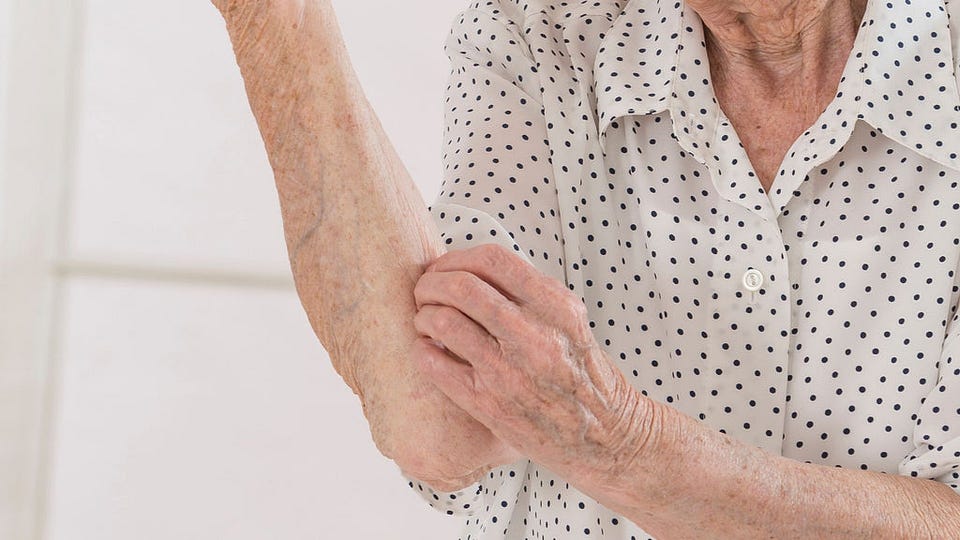
In clinical practice, regardless of setting, there will be some presentations that are pretty boring and others that can be quite exciting.
Itching is common. Whether it’s an itch associated with a rash or one that is more generalised. Whether it’s exciting or not is out of question as for most patients, an itch that doesn’t go away can be quite annoying!
Here’s a case I recently encountered:
Mrs H - 74, booked an appointment for itching. She’s had it for the past 2 years and it was clearly troubling her. She lives alone, mobilises with a stick, and her sleep is poor because of the constant need to scratch.
She has a repeat prescription for a moderate-potency topical steroid which she uses intermittently on a few mildly eczematous patches on her arms and legs, although it’s never been entirely clear that it makes much difference. She takes co-codamol for chronic back pain. Recently, she’s asked if something “stronger” can be prescribed for the itch.
I promise this gets more interesting as I appreciate that chronic pruritus in older adults is common, frustrating, and often doesn’t come with a clear diagnosis. In fact, up to around half of patients will not have an identifiable cause even after appropriate assessment. That said, it’s still important not to default too quickly to “idiopathic” without a careful review, as pruritus can be the first sign of underlying systemic disease or occasionally malignancy. There’s been some important updates regarding this presentation which I thought I’d bring together in this weeks issue.
How Do We Approach This Presentation?
One of the first things to bear in mind is that what looks like a primary skin problem often isn’t. In older patients especially, the skin can appear relatively normal apart from excoriations, with only subtle xerosis or a few secondary eczematous changes from scratching. Dry skin alone is probably the most common contributor and is frequently under-treated. Asking about bathing habits, soap use, and moisturising routines can be surprisingly revealing.
Medication review is equally important and often overlooked. Mrs H’s co-codamol is a good example as opioids are a well-recognised cause of pruritus, even at relatively modest doses. Other common culprits include ACE inhibitors, statins, and NSAIDs.

The challenge, of course, is that stopping or changing these medications in an older person is rarely straightforward. In Mrs H’s case, her analgesia supports her mobility and independence, so any change needs to be weighed carefully against the potential benefits.
Alongside medications, it’s essential to consider systemic causes. Iron deficiency, renal impairment, liver disease (particularly cholestasis), thyroid dysfunction, and diabetes are all worth excluding. Haematological conditions, including polycythaemia and lymphoma, are less common but important not to miss. While malignancy is an uncommon cause overall, the risk is highest in the early period after symptom onset, and vigilance is warranted particularly if there are associated red flags. So asking about weight loss, loss of appetite and any new swellings are vital in this context.
Should We Perform Bloods?
Based on the discussion above, bloods would be a good idea. A pragmatic primary care panel would usually include a full blood count and ferritin, CRP, renal function, liver function tests, thyroid function, HbA1c, and a bone profile. Depending on the context, you might also consider immunoglobulins, a chest X-ray, or LDH if there is concern about haematological disease. These are not about exhaustive testing, but about reasonably excluding common and serious causes.
Prescribe Emollients, Slap on some Steroid and Surely That’s All…?
This rarely works. Skin in the elderly is thinner and has an increased propensity of drying out and hence requires a different approach. Most patients with pruritic will describe their symptoms as “itching” which must feel awful.
Like with most things, management often comes back to basics, though these are easy to underestimate. Explore lifestyle habits as patients who are elderly often regress to very poor dietary habits. Cooking takes a lot of effort and with the cost of living crisis, missing meals is often on the cards.
Take your time to explore emollient use. Encourage the regular, generous use of emollients (preferably ointments) as they can make a significant difference, particularly if xerosis is contributing. Preparations containing menthol can provide a helpful cooling effect (Dermacool 1 or 2%). It’s worth reinforcing consistent use rather than “as needed” application, as many patients underuse these treatments.

Topical steroids, like the one Mrs H has on repeat, have a role only if there is a clear inflammatory component. If the itch is largely generalised and not driven by eczema, escalating steroid strength is unlikely to help and may cause harm with prolonged use.
Antihistamines are often requested but need careful thought in this age group! Sedating antihistamines can increase the risk of falls, confusion, and anticholinergic side effects especially in someone like Mrs H who already mobilises with a stick and lives alone. If antihistamines are trialled, non-sedating options are generally safer. Finally, it’s also important to consider the health economy. Most antihistamines can be purchased over the counter and this should always be encouraged.
What this case highlights is the need to balance symptom control with safety. In older adults, pruritus is often multifactorial involving dry skin, medications, and low-grade systemic issues all contributing rather than a single clear cause. Even when no definitive diagnosis is found, a structured approach including reviewing medications, excluding key conditions, optimising skin care, and being cautious with sedating treatments can make a meaningful difference.
And sometimes, the most useful intervention is not adding another prescription, but stepping back and asking: what might we safely take away?
CPD Non-Medical Prescriber Update
Prescribing practice evolves quickly, and keeping up with guidance, safety considerations and new medications can be challenging in busy clinical roles. Our CPD Non-Medical Prescriber Update, delivered by Pareto Education, is a flexible, self-directed programme designed to help clinicians refresh and strengthen their prescribing knowledge. Led by experienced instructors, the course focuses on safe, effective and confident prescribing across a variety of clinical settings, with practical insights that can be applied immediately in everyday practice.
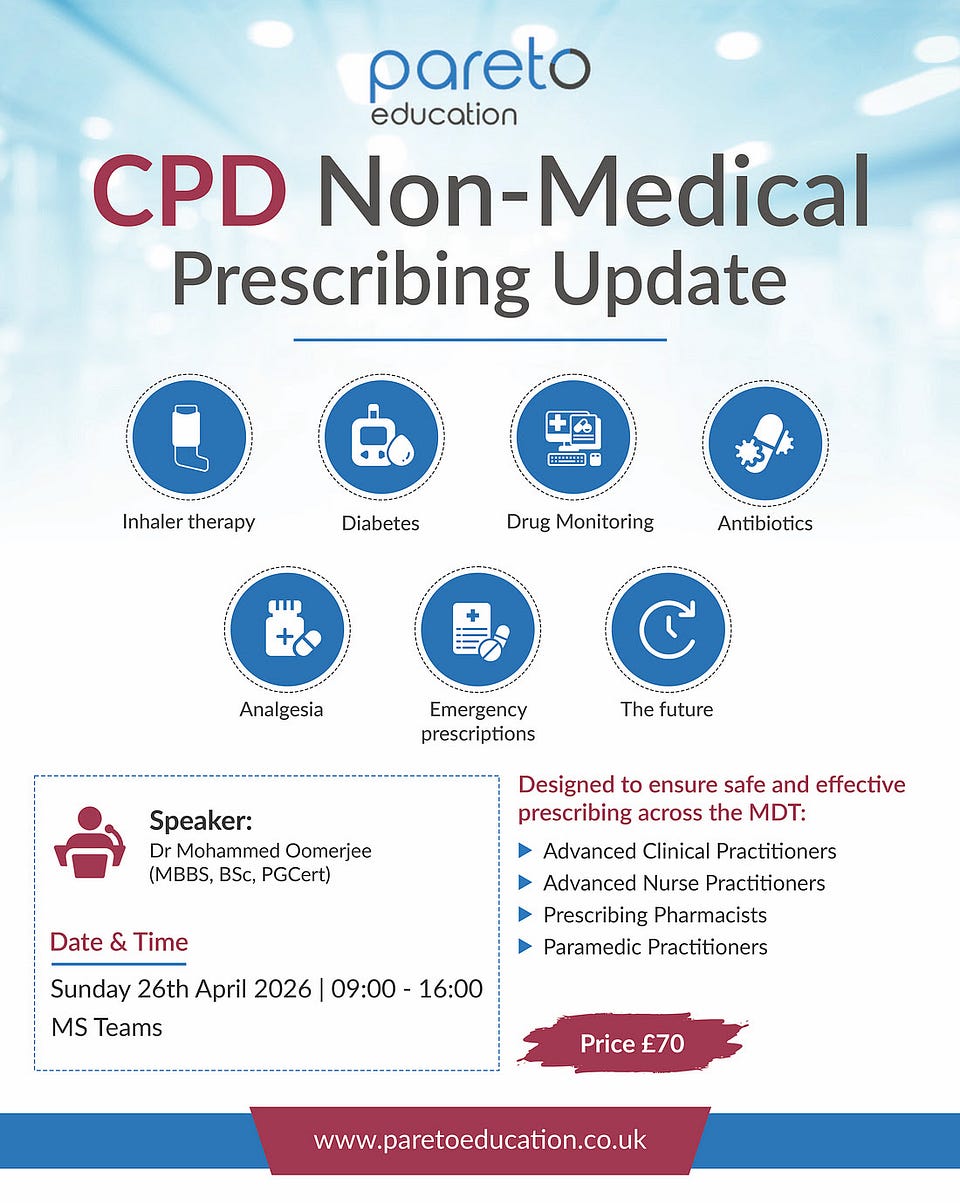
The programme covers key areas including the core principles of safe adult prescribing, paediatric prescribing essentials, antimicrobial stewardship and the latest updates from NICE and the BNF. Participants will also explore practical approaches to high-risk prescribing scenarios, polypharmacy, deprescribing and medicines optimisation in complex patients. Suitable for nurse, pharmacist and allied health professional prescribers across primary and secondary care, this course is ideal for those seeking a structured CPD update, preparing for revalidation, or simply wanting to feel more confident delivering safe, evidence-based prescribing.
Date: Sunday 26th April 2026
SIX CPD Points
Live and recorded access available
Originally published on Substack.


