
The Sick Note Dilemma: Compassion, Boundaries and the Role of the Clinician
Don't Miss Our CPD Non-Medical Prescriber Update
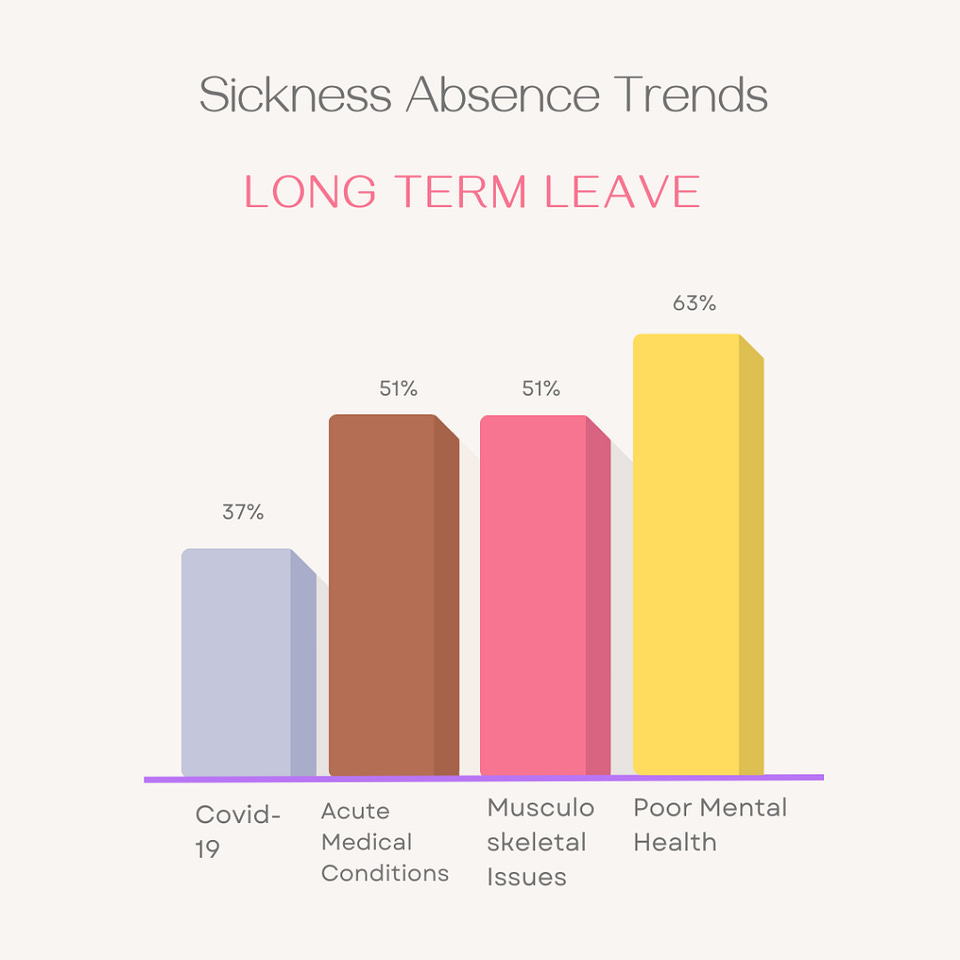
If you’ve opened this weeks issue - you’re probably juggling the same dilemmas I am..
A recent BBC article highlighted a quietly uncomfortable truth in primary care: many clinicians rarely refuse a sick note for mental health problems. In fact, some GPs told the BBC they had never declined one for a patient reporting mental health difficulties.
At first glance, that sounds compassionate and often it is. But it also raises a difficult ethical question: when does helping someone stay off work actually start to harm them?
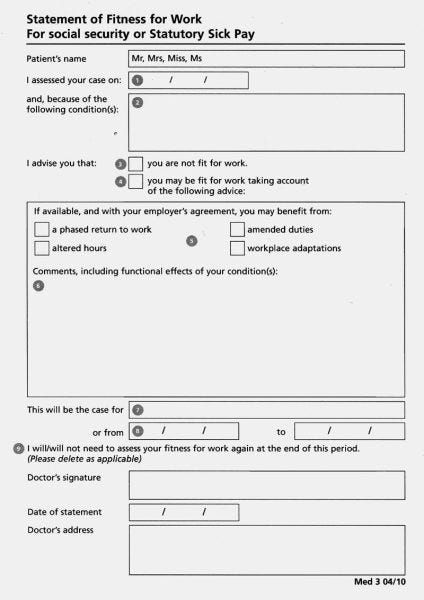
Refusing a sick note is awkward. It often requires probing questions and at times, leads to confrontation. Patients may feel that you are judging them or doubting their reasons. Sometimes the easiest thing is to quietly sign the MED3 and move on…
But this is not just a clinical issue. It sits right at the intersection of healthcare, employment and the wider problem of economic inactivity, which has become a major concern for the UK economy. Economic inactivity refers to the percentage of the population that are not working despite having the ability to work.
In primary care - we’re not only there to address the immediate medical issue but also the repercussions of this. What’s interesting is that now that I work in a UTC, there is also an option to issue a MED3. It’s become the norm in most settings.
So let’s explore the ethics behind a sick note..
The Scenario We All Recognise
Imagine this patient. Actually.. it’s not imagination for most - it’s reality.
A 42-year-old warehouse worker presents with chronic back pain. You first saw him nine months ago after a lifting injury at work. Since then:
- He’s had several courses of analgesia
- Physio was offered but attendance has been patchy
- Imaging shows only mild degenerative changes
- Functionally, he can walk and move reasonably well
Yet every few weeks he returns for another sick note.

You sense the pattern: the longer someone is off work, the harder it becomes to return. Workplaces move on, routines disappear, confidence drops.
Today he asks again:
“Doctor, I’m still not ready to go back.”
You pause. You know what the easy option is.
Write the note. Print. Sign. Next patient. Easy peasy.
But you also know that continuing to sign someone off indefinitely without progress in treatment or rehabilitation may actually reinforce disability rather than recovery.
What the Fit Note Was Designed For
The UK “fit note” was introduced to shift the focus from “not fit for work” to “what work might still be possible.”
Instead of simply certifying absence, clinicians can indicate that a patient “may be fit for work” with adjustments such as:
- Amended duties
- Reduced hours
- Avoiding heavy lifting
- Regular breaks
This framework encourages conversations between employee and employer about staying in work where possible.
It’s also worth remembering a few key practical rules:
- Patients can self-certify sickness for the first 7 days without a doctor’s note.
- After that, a fit note may be required.
- You’re not obliged to work on the patients recommendation. In other words, if the patient wants a month off, you can challenge this by giving 2 weeks and reassessing.
- During the first six months of illness, a note can cover up to three months at a time, depending on clinical judgement.
But the note itself is advice, not an instruction, intended to support work discussions rather than automatically remove someone from employment.
When Mental Health Is the Reason
Mental health sick notes are extremely common—and entirely valid. Depression, anxiety and stress can be just as disabling as physical illness.
In fact, stress, depression and anxiety account for a large proportion of work-related ill health in the UK.
There are clear situations where a sick note is absolutely appropriate:
- Acute depressive episode
- Severe anxiety or panic attacks
- Burnout or overwhelming stress
- Medication initiation with side-effects
- Acute grief response secondary to a bereavement
- Crisis or safeguarding concerns
Sometimes the purpose is simple: respite.
A short period away from work can create space for recovery, therapy, medication titration, or simply breathing room during a crisis. I’m all for this but this needs to be “within reason”
In practice, many clinicians start with two to four weeks, then review progress. Longer periods may be necessary depending on severity and treatment response.
But the key word is review.
When Continuing the Sick Note Becomes Harder
The ethical tension appears when:
- The patient remains off work for months
- Engagement with treatment is limited
- Functional ability appears better than reported disability
- Work itself may actually be therapeutic
Work provides more than income. It brings structure, routine, identity and social contact. Removing that for prolonged periods can worsen both physical and mental health.
And yet refusing a sick note can feel confrontational.
Patients may feel:
- Disbelieved
- Dismissed
- “Pushed back to work”
No clinician enjoys that conversation. It’s awkward.
Practical Ways to Challenge a Sick Note (Without Destroying Rapport)
The aim is rarely to say “no” outright. Instead, the conversation shifts to function and alternatives.
Before qualifying as a GP, I had a useful tutorial session on this topic and here are some top tips:
1. Reframing the Question
Instead of:
“Do you need a sick note?”
Try:
“What parts of your job feel difficult at the moment?”
This moves the discussion from absence to capability.
2. Use the “May Be Fit for Work” Option
Suggest specific adjustments:
- Avoid heavy lifting
- Administrative tasks only
- Reduced hours for two weeks
This preserves the therapeutic relationship while encouraging gradual return.
3. Link Notes to Engagement With Treatment
For example:
- Attending physiotherapy
- Starting CBT or talking therapies
- Reviewing medication
This reinforces the idea that sick leave is part of a recovery plan, not an indefinite state. It also allows the employer to check the progress of treatment plans.
4. Introduce External Assessment
If long-term incapacity is suspected, it may be appropriate to discuss:
- Occupational health assessments
- Universal Credit work capability assessments
These provide a formal functional evaluation outside the primary care consultation. This is the harder options for patients but is necessary especially if the patient is on long-term sickness. It also shifts the responsibility away from the clinician being the sole gatekeeper - I’m sure we want to focus on dealing with medical issues!
5. Use Time-Limited Notes
Shorter notes encourage review.
Instead of three months, try:
- Two weeks
- Four weeks
Then reassess.
The Bigger Picture: Economic Inactivity
The BBC article highlights how this issue has become part of a wider national debate.
Rising numbers of working-age adults are economically inactive due to long-term illness, particularly mental health conditions. The MED3 fit note sits right in the middle of this policy challenge. Clinicians are not employment specialists, occupational health experts or benefits assessors. The fit note was intended to facilitate conversation, not make doctors the final arbiters of work capacity.
The Hard Truth
Sometimes writing the sick note is the kindest option in the moment.
But occasionally it may also reinforce the very cycle keeping someone stuck.
The challenge in primary care is balancing three things:
- Compassion for the patient in front of us
- Clinical judgement about recovery
- Awareness of the broader consequences of long-term work absence
There’s rarely a perfect answer.
But perhaps the goal is not simply deciding whether to write the note.
It’s making sure that when we do, it is part of a plan that moves the patient forward and not further away from recovery.
Have you had any challenges with issuing/refusing sick notes? It would be interesting to hear about your experiences!
CPD Non-Medical Prescriber Update
Prescribing practice evolves quickly, and keeping up with guidance, safety considerations and new medications can be challenging in busy clinical roles. Our CPD Non-Medical Prescriber Update, delivered by Pareto Education, is a flexible, self-directed programme designed to help clinicians refresh and strengthen their prescribing knowledge. Led by experienced instructors, the course focuses on safe, effective and confident prescribing across a variety of clinical settings, with practical insights that can be applied immediately in everyday practice.
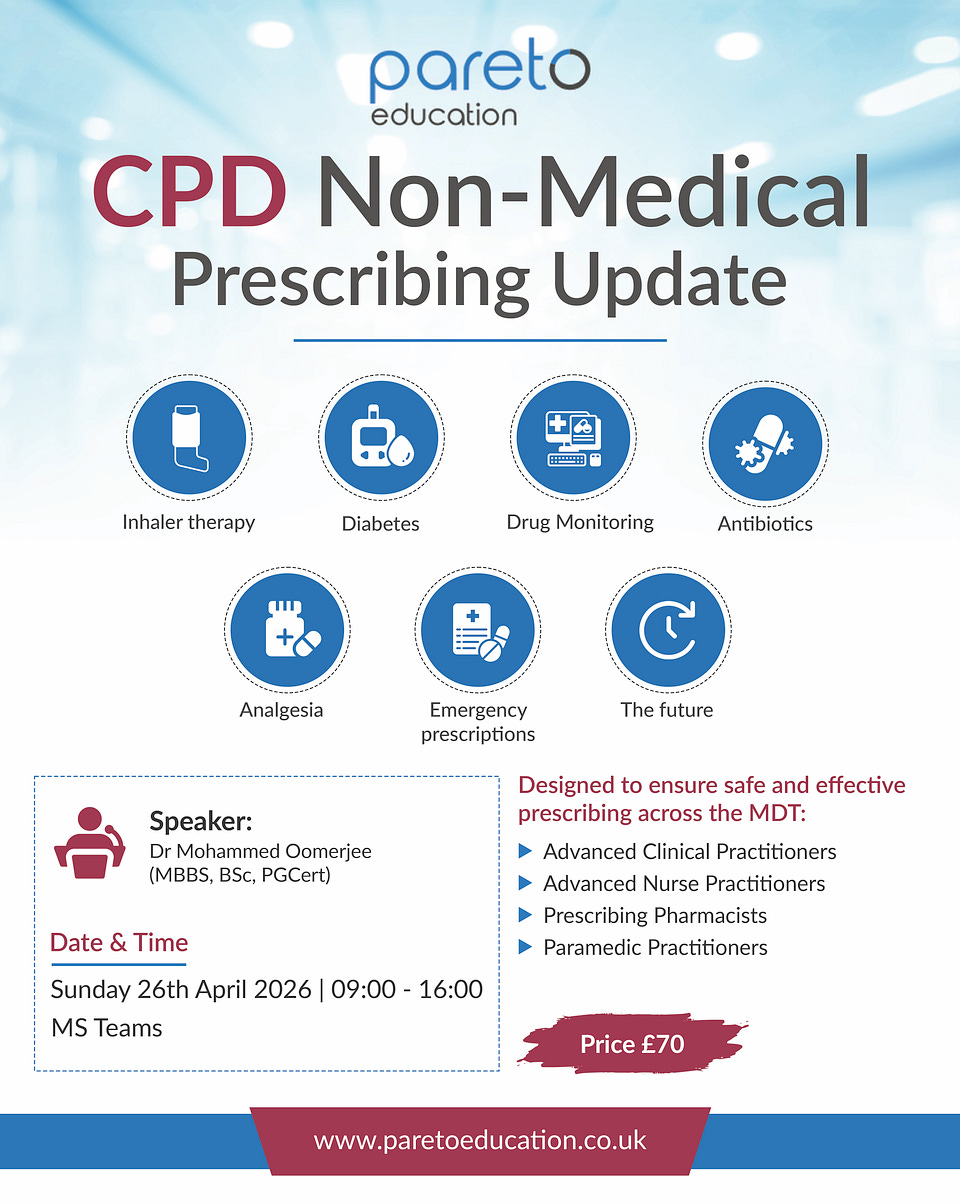
The programme covers key areas including the core principles of safe adult prescribing, paediatric prescribing essentials, antimicrobial stewardship and the latest updates from NICE and the BNF. Participants will also explore practical approaches to high-risk prescribing scenarios, polypharmacy, deprescribing and medicines optimisation in complex patients. Suitable for nurse, pharmacist and allied health professional prescribers across primary and secondary care, this course is ideal for those seeking a structured CPD update, preparing for revalidation, or simply wanting to feel more confident delivering safe, evidence-based prescribing.
Date: Sunday 26th April 2026
SIX CPD Points
Live and recorded access available
Originally published on Substack.


