
What's The Deal With Keto Diets?
I get asked about weird and wonderful diets all the time.

I get asked about weird and wonderful diets all the time. Keto diets are one of them and I’ve actually been on one previously. It was forced on me by my wife and aside from keto-toast, the food tastes atrocious.
… my wife is a great cook by the way. Please believe me.
Here’s the sketch. I was sent an interview where the host was discussing diet plans with a cardiologist. A large chunk of it discussed ketogenic diets and there were lots of claims made. Weight loss, glycemic control, cardiovascular health… it was sounding like the perfect fix.
In such situations I go into “science mode.” Before I’m a clinician, I’m a scientist. Evidence has levels, grades and scope - all of which we’ve spoken about before so it’s important to scrutinise any claims as eventually, patients will ask for our “expert” view.
So what is a ketogenic diet and what are its proven benefits? Let’s get into it.
What is a ketogenic diet?
A ketogenic (“keto”) diet is a very low-carbohydrate, high-fat diet, typically restricting carbohydrates to <50 g/day. It induces nutritional ketosis, where ketone bodies become the primary energy source instead of glucose. Protein intake is moderate, and fat intake is high, often including saturated fats depending on food choices.
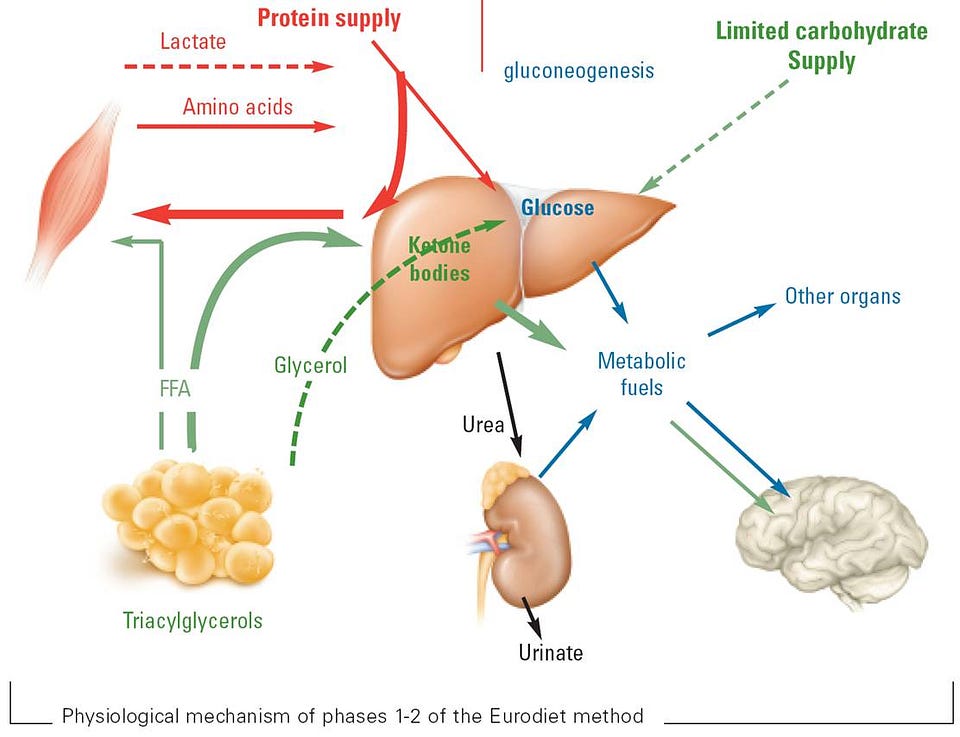
What are the proposed benefits?
Ketogenic diets are often promoted for weight loss and improvements in metabolic health. They’re talked about on talkshows, podcasts and plenty of TikTok videos.
As for the research? It’s interesting to say the least!
Randomised controlled trials and meta-analyses demonstrate that very low-carbohydrate diets can lead to short-term weight loss and reductions in HbA1c in adults with overweight or type 2 diabetes. These effects are most pronounced in the first 3–6 months BUT appear comparable to other calorie-restricted dietary approaches over longer follow-up periods. Current evidence suggests that metabolic improvements are largely attributable to overall energy deficit and weight loss rather than the state of ketosis itself. That’s an important footnote!
With regard to cardiovascular risk, ketogenic diets often result in reductions in triglyceride levels and modest increases in HDL cholesterol. However, many studies also demonstrate increases in LDL cholesterol, particularly when diets are high in saturated fat. With the link between LDL cholesterol and cardiovascular disease, this raises some concern.
Unfortunately, long-term outcome data assessing cardiovascular events in individuals following ketogenic diets are lacking. NICE are pretty strict on keto diets but we’ll address that later.
Beyond this, claims regarding benefits for neurological conditions such as Alzheimer’s disease or cognitive decline remain… speculative. Evidence in these areas is limited to small trials and observational studies, and there is currently insufficient high-quality clinical evidence to support ketogenic diets for neuroprotection or treatment of neurodegenerative disease in the general population.
What about the risks?
Ketogenic diets are associated with several limitations and potential risks, many of which arise from their restrictive macronutrient composition.
As you can probably imagine, long-term adherence is poor due to the elimination of commonly consumed carbohydrate-rich foods, which can reduce dietary variety and social acceptability. The food tastes.. interesting.
Early adverse effects such as fatigue, headache, dizziness and constipation—often referred to as “keto flu” often occur as a result of glycogen depletion, fluid shifts, and electrolyte loss during the initial transition to ketosis. Patients might become constipated due to a reduced intake of fibre-rich foods like fruit and whole grains. Patients on SGLT-2 should be advised AGAINST such diets due to the chance of significant hypoglycaemia and as we’ve mentioned above, there is a link with rising LDL cholesterol.
What does NICE say?
It’s tricky. You’ll see why.
Ketogenic diets are not recommended by NICE as routine interventions for weight management, type 2 diabetes, or cardiovascular risk reduction within the NHS. Current guidance prioritises individualised and sustainable approaches that emphasise fibre-rich carbohydrates, unsaturated fats and overall nutritional quality. While lower-carbohydrate diets may be considered short-term for selected adults with type 2 diabetes, this does not extend to endorsing nutritional ketosis, particularly given concerns around long-term cardiovascular risk, sustainability and medication safety.
I said it’s tricky because guidance suggests that UK clinicians should acknowledge patient interest without actively promoting ketogenic diets, using consultations to address media-driven claims and refocus discussions on NICE-aligned goals. It advises bringing together the evidential basis (or lack of) and explaining the benefits/harms. For those already on such a diet, be sure to carry out medication reviews and monitoring of chronic illness.
Key Take-Home Messages
• Keto diets may offer short-term metabolic benefits, but long-term safety and superiority are unproven.
• LDL cholesterol rise and sustainability remain major concerns.
• NICE supports balanced, individualised dietary approaches, not routine ketogenic dieting.
• Clinicians should guide discussions using evidence, shared decision-making, and patient safety rather than media narratives.
So that’s your review on keto diets. Are there any other diets/therapies/alternative medicine you’d like us to review?
Inside Moto-GP Medicine..
In this episode of the Pareto Podcast, we speak with Dr Basim Manzoor, a GP working trackside in MotoGP, about the high-pressure world of elite motorsport medicine. From split-second decision-making during serious crashes to building a portfolio career beyond the NHS, Dr Basim shares what it really takes to work at the highest level of international racing. Check it out below:
Website: www.paretoeducation.co.uk
Instagram: www.instagram.com/pareto_ed
Twitter: www.twitter.com/pareto_ed
Youtube: https://bit.ly/3DPm23c
Email: info@paretoeducation.co.uk
Originally published on Substack.


