
When Viruses Go on Holiday
Join us on our Dermatology Masterclass

After COVID-19, many of us instinctively tense up whenever headlines mention quarantined passengers, respiratory symptoms, or international infection control teams boarding a vessel in PPE. I’m sure we all remember the process’ one had to go through to board a flight, the double vaccination requirement and the constant fear of either infection or mandatory quarantine.
Summer is coming and patients are planning to go away. Some of them, certainly where I work will be aboard cruise ships and are naturally concerned about the latest hantavirus outbreak. Flashbacks to 2020-21 are vivid and this newsletter will help you understand the nature of this handbrake and be able to provide well researched, scientific responses to any questions coming your way.
Let’s go..
So… What Is Hantavirus?
Hantaviruses are a family of viruses primarily carried by rodents. Humans usually become infected through exposure to aerosolised particles from rodent urine, droppings, or saliva. In plain English: this is less “someone sneezed near me on Deck 5” and more “a rodent problem nobody noticed until people became unwell.”
It belongs to a family of viruses that are biologically very good at surviving, adapting, and causing severe disease once they cross into humans. Structurally, they are enveloped RNA viruses from the Hantaviridae family and contain:
- a lipid envelope,
- surface glycoproteins used to enter human cells,
- and a segmented single-stranded RNA genome.
That segmented genome is particularly important. RNA viruses mutate more readily than DNA viruses because their replication is inherently error-prone. In virology terms, they are constantly “experimenting.”
Certainly sounds innovative in a biotech startup but less reassuring in a pathogen.
The virus primarily targets:
- endothelial cells lining blood vessels,
- pulmonary tissue,
- and renal tissue.
This explains why severe infection can lead to:
- capillary leak,
- pulmonary oedema,
- hypotension,
- renal failure,
- and, in some cases, rapid cardiovascular collapse.
Therefore, hantavirus has the potential to result in two major complications:
- Hantavirus Pulmonary Syndrome (HPS) — more common in the Americas and associated with severe respiratory illness.
- Haemorrhagic Fever with Renal Syndrome (HFRS) — seen more frequently in Europe and Asia, affecting the kidneys and vascular system.
Like with all virus’, hantaviruses present with non specific symptoms. Cough, cold, myalgia are the mainstay of early presentation. However, severe disease can progress rapidly, particularly with pulmonary involvement, making early recognition and supportive care critical.
However, unlike COVID19, the rate of patient-to-patient transmission is very low so despite the news coverage raising alarm bells - it is not being treated like a pandemic and this is where we need to step in.
While outbreaks understandably generate anxiety, risk communication must remain proportionate. Healthcare professionals play an essential role in preventing fear from outrunning evidence. The issue with this outbreak is that it is on a ship and such headlines concerning it tend to get sensationalised. Terms like “outbreak,” “quarantine,” and “novel virus” can rapidly fuel misinformation online.
Part of modern healthcare is therefore not just managing disease, but managing uncertainty responsibly. This also involves vital vaccine education. Despite all the positives of social media, it has really changed the landscape of medicine. 1 in 5 children are unvaccinated so there is still much more left to do!
Some Points to Take Away
Whilst we might not be directly affected by hantavirus it is nonetheless a reminder that viruses are always evolving and our response has to be well considered. Vaccines, antivirals and travel restrictions all form part of a sustained response and we each play a huge part. Public anxiety around infectious disease’ remains high since COVID19 but vaccine uptake sits at rock bottom. It means there’s a lot of work to do.
That work may not make cruise brochures. But it saves lives every day.
And perhaps the final lesson is this:
Viruses may enjoy international travel — but fortunately, infection prevention teams do not need a passport to stop them.
Ready for this Weekend?
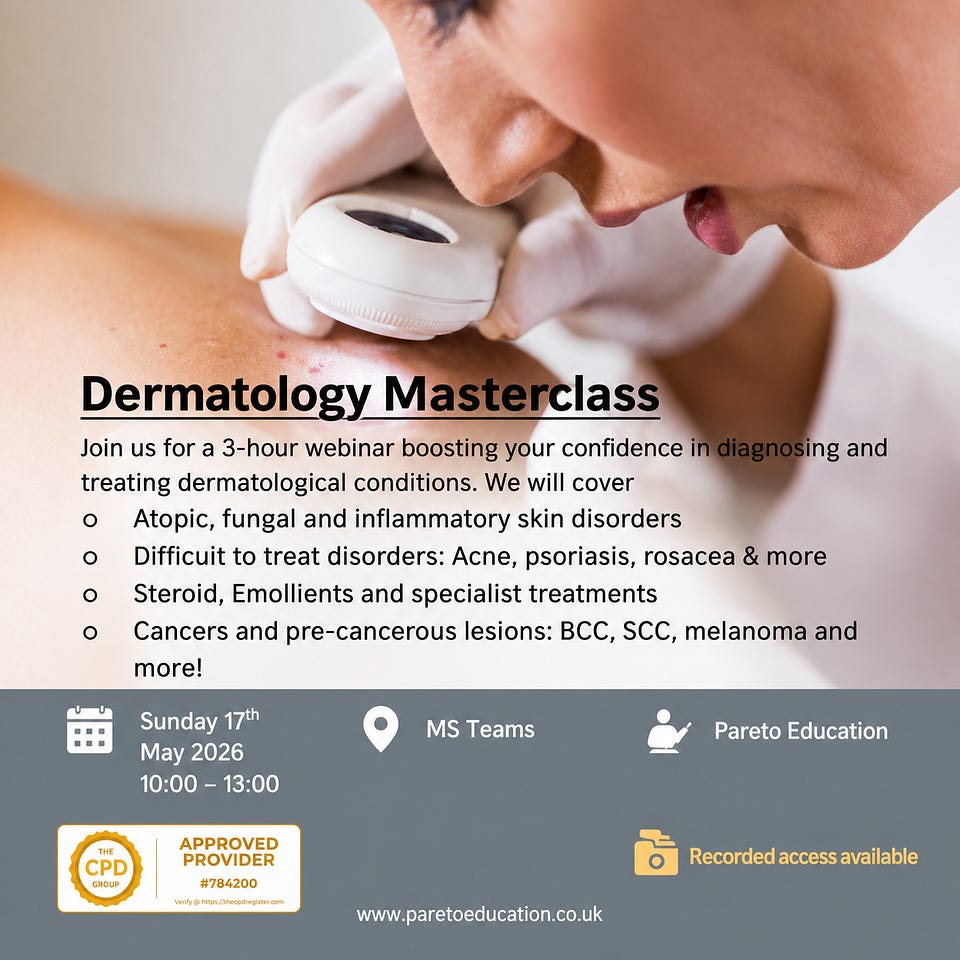
Have you heard about our upcoming dermatology masterclass?
t is one of our most popular masterclass’ and it’s back on your screens in a few weeks time.
Join us for 3-hour course boosting your confidence in diagnosing and treating dermatological conditions. This course will provide examples of skin lesions on people of varying skin colours.
We will cover:
- Atopic, fungal and inflammatory skin disorders
- Difficult to treat disorders: Acne, psoriasis, rosacea & more
- Steroid, Emollients and specialist treatments
- Cancers and pre-cancerous lesions: BCC, SCC, melanoma and more!
As part of this course you will receive
- Live session
- Recording for future access
- CPD accredited certificate.
Originally published on Substack.


