
Where Do I Add Value as a Clinician?
Some personal reflections from primary care...
Incase you don’t know, I had a one year stint as a trainee radiologist. Reading scans, liaising with specialties and facilitating important decisions was the appeal. In the end I left, primarily because I wanted to hear a “thank you” as part of my job.
Okay, that wasn’t the only reason but it was certainly a part of it. I liked to know that patients could attribute their diagnosis and/or treatment to me. Not that I was begging for appreciation, it was more so that I stayed motivated in my role. I wanted to know that I was making a difference and a “thank you” was one way that was expressed.
So I decided on general practice as my specialty and I must say, my experience has sometimes been mixed. Patients can be quite demanding, the admin keeps piling and a large part of the job involves time management and referrals.
It’s easy to forget that in origin, those working in general practice are diagnosticians in the most truest sense. We rely on precise histories, clinical examinations and use our communication skills to “negotiate” an investigation/treatment plan.
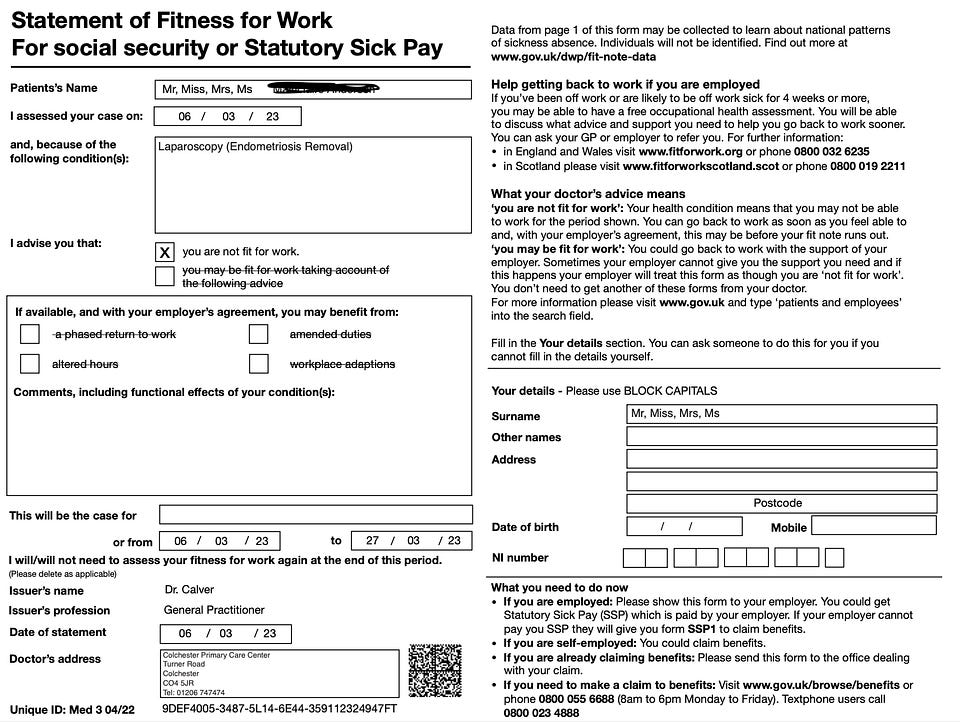
But wait a second.. maybe this is all me just talking in my head and telling myself how important I am. Patients still see primary care as the “point of access” to complex care needs. We often find ourselves on the other end of “demands” - sick notes, blood tests and a referral (or an expedite letter if one has already been sent).
Example of a sick note
“What value do I provide?” is the question I keep asking. The satisfaction of making a diagnosis can never escape you - whether a UTI, LRTI or De Quervian’s tenosynovitis. However, those opportunities are becoming less and less, especially with summer around the corner and the number of acute presentations reducing. Even MSK is becoming a thing of the past. To clarify, MSK problems still exist but now patients can now simply book to see the first contact physiotherapist (who are fantastic).
So how does one mitigate this feeling? I’m not saying there’s no value in being a generalist by the way. Even as a generalist, whether in general practice, A&E or AMU you can make an impact. However, the avenues of making an impact are getting restricted. Services are getting busier, patients are getting more complicated and “patient flow” is given increasing priority. I became a clinician to help people but am I really able to help people? or am I simply signposting them to people who can actually help them.
So I had to ask myself, is there something special I could do? Is there a skill I can develop that would truly diagnose/treat patients? The feeling of “adding value” is really important and in the field of primary care, we can easily lose sight where we exactly add value. So what should we do?
A Unique Opportunity to Find Your Niche
Not to sound cliche but the NHS is evolving. NHS England has disbanded and ICBs have been asked to cut-back, but this is to enable an AI-powered and a primary care focussed NHS. So what does this mean? It could unlock new roles in technology and clinical practice which may help “re-vitalise” the clinician spirit. This may include ultrasound diagnosis, specialist roles such as colposcopy/hysteroscopy and more.
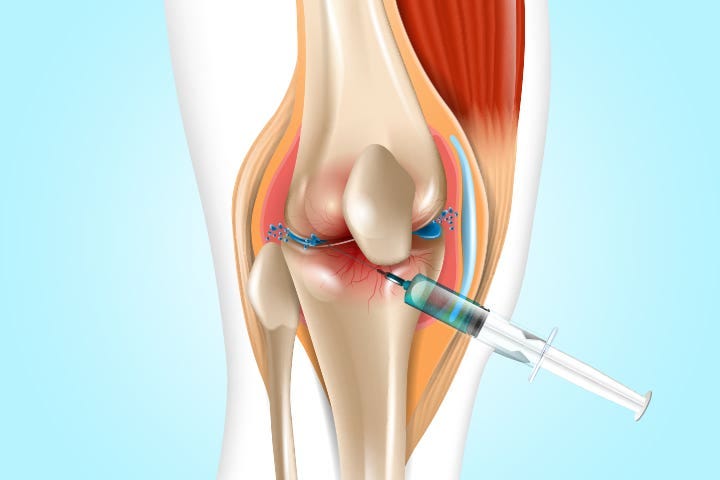
Currently, there are diplomas available for clinicians to upskill in vital services. For example, I spent 6 months learning how to do intra-articular joint injections to help treat patients with joint pain. It’s a skill that most patients appreciate as there are moments where patients get instant relief. The great thing about having the skill is that they can be administered in multiple settings and in various places. If you are interested in this, then think about reaching out to your local rheumatology department or find a primary care clinician who can train you. It’s also also important to do a course to help back up your skill.
The same applies in other areas and there are plenty:
- Coil insertion - You can apply for funding to obtain training on coil insertion. Practices get paid handsomely for this and you can obtain the license to perform such procedures by the FSRH.
- Minor Surgery - When I last went to a minor surgery course, many of the attendees were AHPs. There is a significant push to try and shave off secondary care waiting lists. For example, whilst basal cell carcinomas were always removed by secondary care dermatologists, this has now shifted to primary care. See what local service is available to you.
- ENT - Within this, ear syringing/microsuction services are a big one. Think about all the patients you’ve seen with hard, waxy ears. We all know that olive oil will take years to deal with such wax. The waiting list for this is huge and whilst many private providers have opted to provide such services, there is still a demand for NHS ear syringing/microsuction therapies.
- Right to Choose - Yes.. we’re all thinking of this one. No doubt, since ADHD services have been listed as part of right to choose, the floodgates have been opened. Weight loss services could possibly be the next one and there are a list of private providers ready to offer their services. Approach some of these organisations to see if they have some training on offer.
- Chronic Diseases - These are not going anywhere… trust me. More and more people are being diagnosed with conditions such as asthma, COPD, diabetes and more. Specialist teams are being bombarded with patients and there is always room for primary care clinicians with a specialist interest. This could be done formally or informally (through experience) but it is certainly worth considering.
- Education - Training the next generation of clinicians requires good quality placement provision. This includes facilitating debriefs, tailored teaching and working with local universities/course leads to help assist students in their development. Practices are always looking for clinicians to contribute to this so if you’re interested in teaching, be sure to enquire!
It’s an exciting time to be an NHS clinician as there are a plethora of opportunities available. Upskilling in such a way allows us to remain “valuable” to both patients and the service. We will see many more “bridging” roles between primary and secondary care evolve and it’s vital that you get your foot in early!
Until next time..
CPD ECG Masterclass
We're back with our MOST POPULAR 3-hour webinar covering the core principles behind ECG interpretation. If you can't make it live, the full event will be RECORDED.
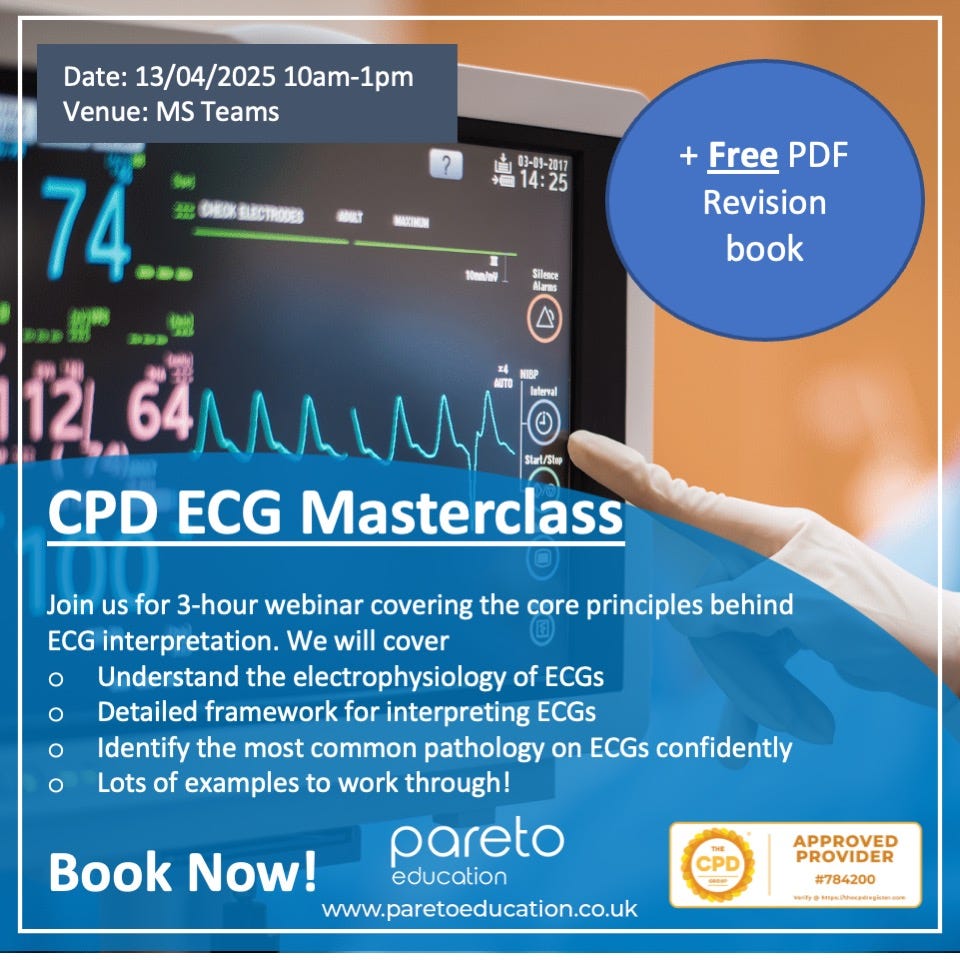
We will cover:
- Understand the electrophysiology of ECGs
- Detailed framework for interpreting ECGs
- Identify the most common pathology on ECGs confidently
- Lots of examples to work through!
Suitable for qualified professionals and clinical students
Delivered by Dr Mohammed Oomerjee,
Date 13/5/25 @ 10am - 1300
As part of this webinar you will receive:
- 3 CPD Points (externally accredited)
- 60 days recorded access
- FREE ECG Made Easy e-book
Learn How to Interpret Chest X-rays (For FREE)
We’ve been working hard with to produce high quality content on YouTube. Our latest video on chest x-ray interpretation will give you a FULL PROOF framework to interpret this vital investigation. Be sure to like, subscribe and share our videos with others.
Website: www.paretoeducation.co.uk
Instagram: www.instagram.com/pareto_ed
Twitter: www.twitter.com/pareto_ed
Youtube: https://bit.ly/3DPm23c
Email: info@paretoeducation.co.uk
Originally published on Substack.


