
Yes... It's Mounjaro AGAIN
Interesting Study from the BMJ that deserves our attention

2026 has started and the first big news concerns the legacy of 2025 - Mounjaro. We’ve written about Mounjaro a few times and whilst I’d hate to say “I told you so…” I’ll go ahead and say it. I told you so. Mounjaro is no long term fix!
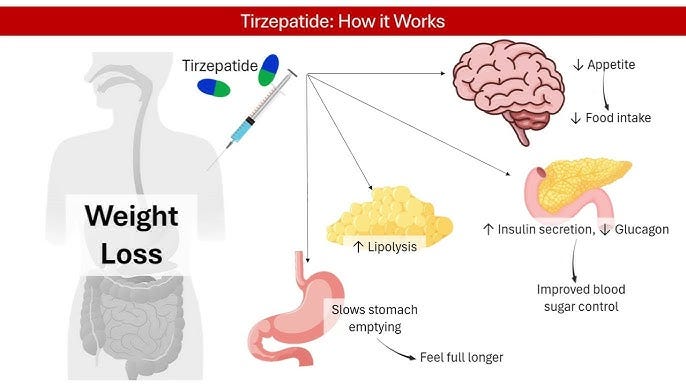
Pharma has made billions from Mounjaro and it’s clear that over the past year, it has become easier to obtain. Services including those within the NHS are being developed around Mounjaro due to how effective it is in helping people shed off their excess weight. Mounjaro as well as other GLP-1 receptor agonists like Wegovy alter appetite signals considerably helping patients eat significantly less. The science makes sense and the results have been great so far.
However, there’s also been a question mark about two things:
- Are there any long term side effects?
- What happens when you stop?
Unfortunately I’m not going to be able to answer the first question but a recent systematic review and meta-analysis has certainly addressed the second. I’ll give you the conclusion - the weight gain after ceasing Mounjaro is RAPID.
Like with any study, we should always review the quality of the research. It reviewed 37 studies which involved a total of 9,341 adults who had taken weight-loss medications for at least 8 weeks and then stopped. It was a good quality study - one that utilised a broad evidence base covering many medications and thousands of patients. As well as looking at weight outcomes the study also assessed key cardio metabolic markers after cessation of the weight loss measure.
Looking at the study though - there were some problems. The follow up time was relatively short (32 weeks) and whilst the data shows a useful pattern, it doesn’t quite explain why weight regain rapidly occurs.
So what did it find? Weight lost while on medication tends to return fairly quickly once the medication stops.
The results were actually quite startling - after stopping medication, the weight gain was 0.4kg per month and could be up to 0.8kg per month on semaglutide. In other words, it would only take 1.5-2 years for patients to return back to their original weight. Crazy.
As for cardiometabolic reversal, that’s also rapid. Improvements in blood pressure, cholesterol and glucose control can turn back to their original values within the same time period.
If we were to contrast this to behavioural weight management programmes, the rate of weight regain is much slower. On average it would be 0.3 kg per month slower which makes a huge difference.
Now this might sound controversial but it’s vital that we move away from the “Magic Jab” narrative. Mounjaro is incredibly effective but is best utilised alongside behavioural management programmes. Changes in lifestyle are truly sustainable while purely relying on Mounjaro is in effect, a short term measure. Psychologists who study weight have concluded that it is influenced by biology, behaviour, environment, social context and more. Whilst we are unable to influence many of these factors, health behaviour is something we can certainly provide counselling on.

Another reflection is that in the context of cardiometabolic conditions, Mounjaro can be better utilised. We know that it does a fantastic job in assisting conditions such as diabetes, high blood pressure and cholesterol. Further research will need to be done to see if it can have a wider role in helping to manage these conditions.
Finally, The faster rate of weight regain after stopping medications highlights the importance of comprehensive care including structured behavioural support, nutrition guidance, psychological counselling and long-term follow-up during and after medical treatment.
So that’s your quarterly Mounjaro update. Until next time!
Chronic Disease 101 YouTube series
We’re excited to launch the FREE Chronic Disease 101 series on YouTube which will act as vital CPD for thousands of clinicians across the country.
This will be a series of videos for clinicians conducting long-term condition reviews, professionals planning to transition patients from acute care into primary care, and anyone involved in ongoing chronic disease management.
Each video will break down key conditions with a focus on evidence-based review strategies, clinical priorities and actionable insights. Our first installment dives into COPD review, guiding you through the essentials of assessing symptoms, monitoring lung function, identifying exacerbation risk and tailoring management plans that align with best practice. Don't forget to like, share and subscribe!
Website: www.paretoeducation.co.uk
Instagram: www.instagram.com/pareto_ed
Twitter: www.twitter.com/pareto_ed
Youtube: https://bit.ly/3DPm23c
Email: info@paretoeducation.co.uk
Originally published on Substack.


